Best AI Security Testing Tools to Protect Your AI Systems
Explore the best AI security testing tools to detect vulnerabilities, prevent attacks, and secure AI models, APIs, agents, and enterprise workflows.

Kruti
Artificial Intelligence now plays a central role in decision-making across sectors such as finance, healthcare, security and defense. As these systems become more integrated into critical operations, assessing their security against evolving threats has become essential. AI introduces unique vulnerabilities - such as data poisoning, prompt manipulation and model inversion - that traditional testing cannot detect. AI security testing tools help organizations identify these weaknesses early and ensure their models, pipelines and agents remain safe and reliable.
This blog explores the importance of AI security testing, why it matters, categories of AI testing tools and more.
What is AI Security Testing?
AI security testing checks how well AI models hold up against attacks and real-world challenges. It’s different from regular software testing because it looks for unique weaknesses like data poisoning, prompt injection, model inversion and unauthorized fine-tuning. The goal is to find and fix these problems before attackers exploit them.
Testing includes checking both the model layer (such as model weights and decision boundaries) and the pipeline layer (data collection, training and deployment). Security engineers use special frameworks and automated AI testing tools to mimic real-world attacks and confirm that the AI system acts safely, predictably and ethically.
Why AI Security Testing Matters?
AI systems are only as secure as the data and logic that shape them.
Data Integrity
AI models depend on correct and trustworthy training data. If this data is compromised or poisoned, it can create backdoors, give wrong results and reduce the model’s performance. Ongoing testing ensures that data sources remain secure and protected from interference.
Model Reliability
Adversarial inputs can change how models read data, causing wrong or unsafe results. Security testing uses simulated attacks to find these weaknesses. This ensures that AI systems act reliably, even when exposed to harmful inputs.
Compliance Alignment
Laws like the EU AI Act and NIST AI RMF require organizations to ensure their AI models are safe, easy to understand and well-managed. Security testing provides the evidence and records needed to meet these rules. It shows that the organization follows good safety practices and is responsible for managing AI properly.
Trust Assurance
Trust in AI systems depends on their ability to perform reliably and act according to ethical standards. Regular security checks make sure AI models stay within their intended limits and keep user data private. This helps build trust and encourages more people to rely on AI for decision-making.
Incident Resilience
AI breaches can disrupt operations, reveal sensitive data and harm an organization’s reputation. Security testing improves resilience by identifying and fixing vulnerabilities before attackers exploit them, resulting in faster recovery and stronger overall security.
Categories of AI Security Testing Tools
AI security testing tools differ in purpose and testing methods. The main categories in this list of AI security testing tools include:
Adversarial Attack Libraries
These tools imitate evasion, extraction and poisoning attacks to test how AI models behave under threat. They help detect weaknesses in both training data and model design. For example, IBM’s Adversarial Robustness Toolbox (ART) provides thorough vulnerability testing for a wide range of deep learning models.
Model Supply Chain Auditors (AI-SPM Tools)
AI supply chain security tools track dependencies, data flows and third-party integrations to uncover potential vulnerabilities. Platforms like Wiz AI-SPM, Protect AI Radar and Akto enhance visibility and help maintain AI model integrity. While effective, they may miss advanced threats like data poisoning or hidden backdoors. Combining these tools with governance, monitoring and layered security ensures robust AI protection.
Prompt and Agent Red-Teaming Platforms
These platforms check LLMs and agentic AI systems for issues like prompt injection, jailbreaks and data theft. They imitate attacks from malicious users to find weaknesses before deployment. For example, Obsidian AI, Lakera Guard and Akto’s red-teaming modules perform continuous testing for generative and autonomous AI models.
Explainability and Bias Analysis Tools
These tools identify bias, data shifts and transparency issues in AI model decisions, helping ensure fairness, interpretability and regulatory compliance. Solutions like Fiddler AI and Truera provide insights into model behavior and support accountability reporting.
Runtime Monitoring and Detection Platforms
They protect deployed AI models, inference endpoints and APIs from attacks in real time. These tools ensure AI models remain safe and secure at all times. For example, HiddenLayer, Robust Intelligence and Akto use real-time protection along with constant threat checking and incident handling.
How to Choose the Right AI Security Testing Tool
Security engineers should check these key factors before selecting a tool.
Model Type and Use-Case
Different types of AI systems have unique security risks. Vision models can be fooled or tampered with, while NLP models and agent-based systems are more easily affected by misleading inputs or altered instructions. Selecting the right security testing tools for each AI model type and its use case ensures the tests are accurate and provide useful results.
Integration Support
AI security tools should integrate seamlessly with CI/CD pipelines and MLOps platforms, enabling continuous testing without disrupting development or deployment. This ensures automated security checks throughout the entire AI lifecycle, from data collection to production.
Testing Scope
A strong security plan checks the model before training, enhances it during development and protects it after deployment. The right tools should look at everything: datasets, model settings and live endpoints together. This way, problems can be found and fixed early so they don’t affect users.
Regulatory Alignment
Compliance-driven testing helps organizations meet standards like the EU AI Act, NIST AI RMF and ISO/IEC 42001. Tools that include governance mapping and ready-to-use audit documentation make regulatory reporting easier. This alignment reduces the burden of compliance and improves accountability in AI operations.
Reporting and Automation
High-quality AI security testing tools deliver detailed, automated reports that translate complex vulnerabilities into clear risk insights. They include patch recommendations, attack simulation results and trend dashboards. Automation ensures issues are fixed faster and provides continuous insight into the constantly changing AI threat landscape.
Integrating AI Security Testing into Agentic Security Workflows
Agentic security systems leverage autonomous agents to detect, respond to and mitigate threats in real time.
Embed testing during model training and deployment
Performing security checks early in the model lifecycle helps find vulnerabilities before production. Security engineers should add adversarial testing, data validation and bias analysis during the training phase. This proactive approach lowers post-deployment risks and ensures the model’s integrity from the beginning.
Automate adversarial simulations in continuous testing pipelines
Agentic systems change over time through data updates and retraining cycles. Adding adversarial simulations to CI/CD workflows allows automatic testing after each model update. Platforms like Akto provide continuous red-teaming and threat modeling to help AI systems stay strong and secure at scale.
Incorporate model integrity checks into AI-driven SOC operations
Agentic security workflows should include model verification and behavioral monitoring within Security Operations Centers (SOCs). By linking AI testing data to incident response systems, security engineers gain visibility into model anomalies and unauthorized actions. This integration bridges model-level insights with operational defenses.
Apply governance and policy enforcement across lifecycles
Structured governance ensures that every autonomous agent operates within ethical and regulatory limits. Integrating AI security testing with compliance frameworks provides auditability and accountability. Policies that follow standards such as the NIST AI RMF or the EU AI Act help ensure agentic systems behave securely, transparently and reliably.
Establish continuous feedback and improvement loops
Agentic systems depend on constant learning and adaptation. Feeding test results, incident data and performance metrics into the training process strengthens future defenses. This continuous feedback keeps evolving agents resilient, transparent and aligned with security objectives.
Top AI Security Testing Tools
AI security testing tools simulate attacks and monitor AI models, APIs and agents to detect vulnerabilities and enforce robust protection across the AI lifecycle.
Akto
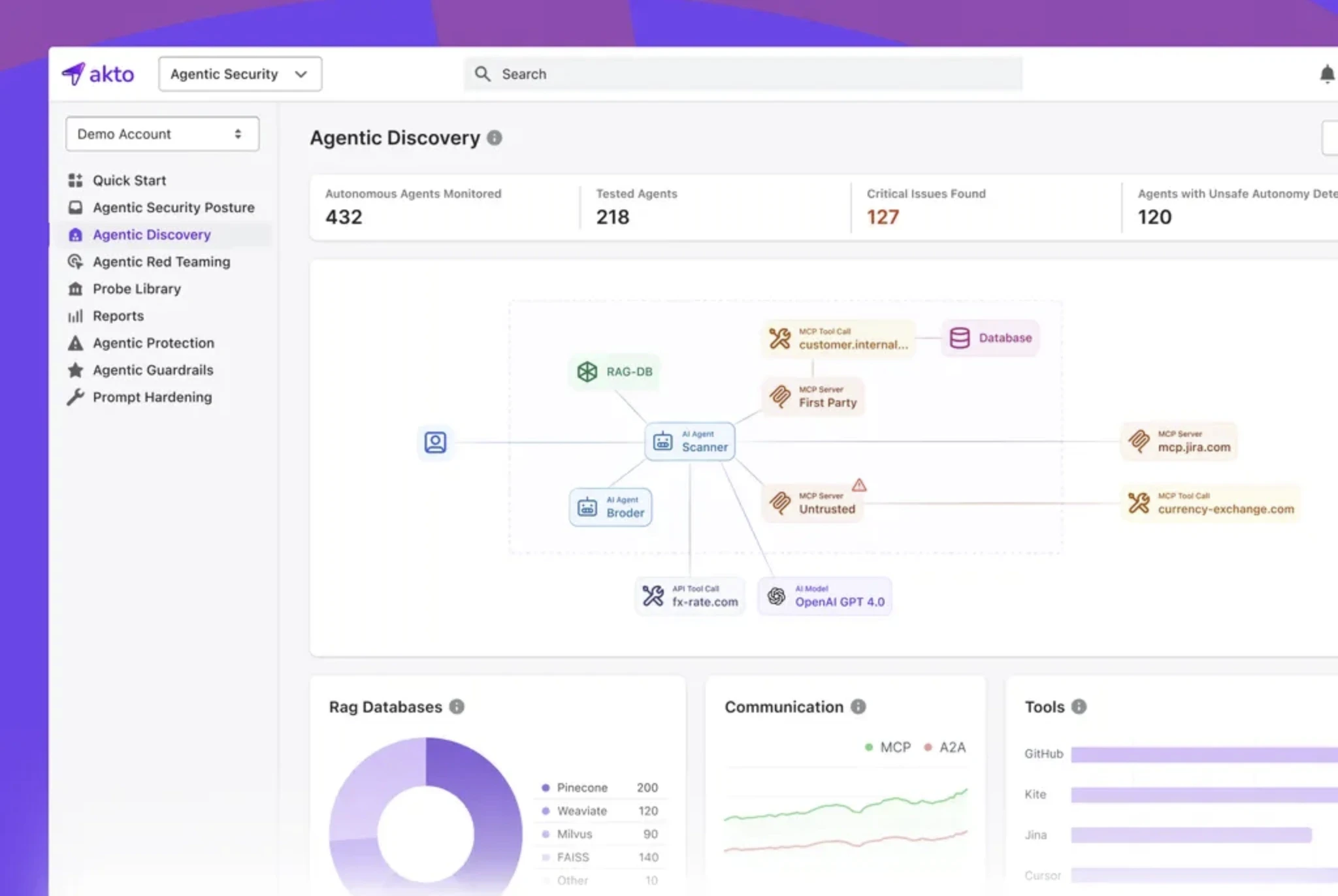
Akto delivers continuous security for MCP workflows, AI agents, LLM-based APIs, and traditional APIs as an advanced AI Security testing tool. It automatically identifies MCP servers, agent endpoints, and APIs (even shadow or undocumented ones), tests them for vulnerabilities and AI-specific attack vectors (such as prompt injection or tool misuse), and provides real-time monitoring and guardrails to catch and block malicious or abnormal agent behavior. With full visibility into AI-to-API and agent-to-tool interactions and built-in governance capabilities, Akto helps teams prevent data leaks and unsafe tool actions-keeping autonomous systems secure across cloud, hybrid, and on-prem environments.
Lakera Guard
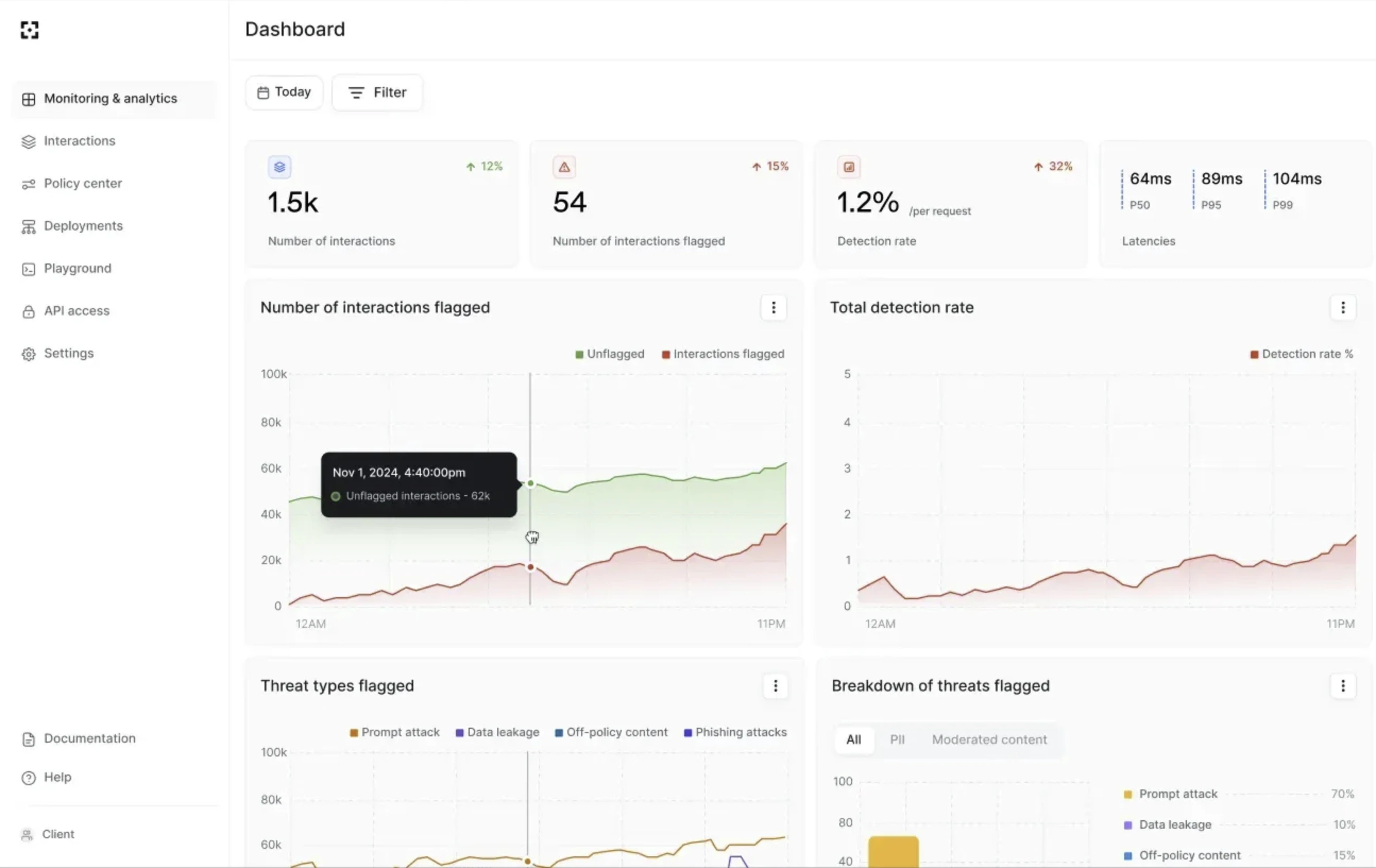
Lakera Guard specializes in securing large language models by protecting against prompt injection, jailbreaks and sensitive data exposure. It works like a real-time filter between users and LLMs, blocking harmful or unsafe inputs and outputs. This makes it useful for organizations that run chatbots and AI assistants in live environments.
Protect AI
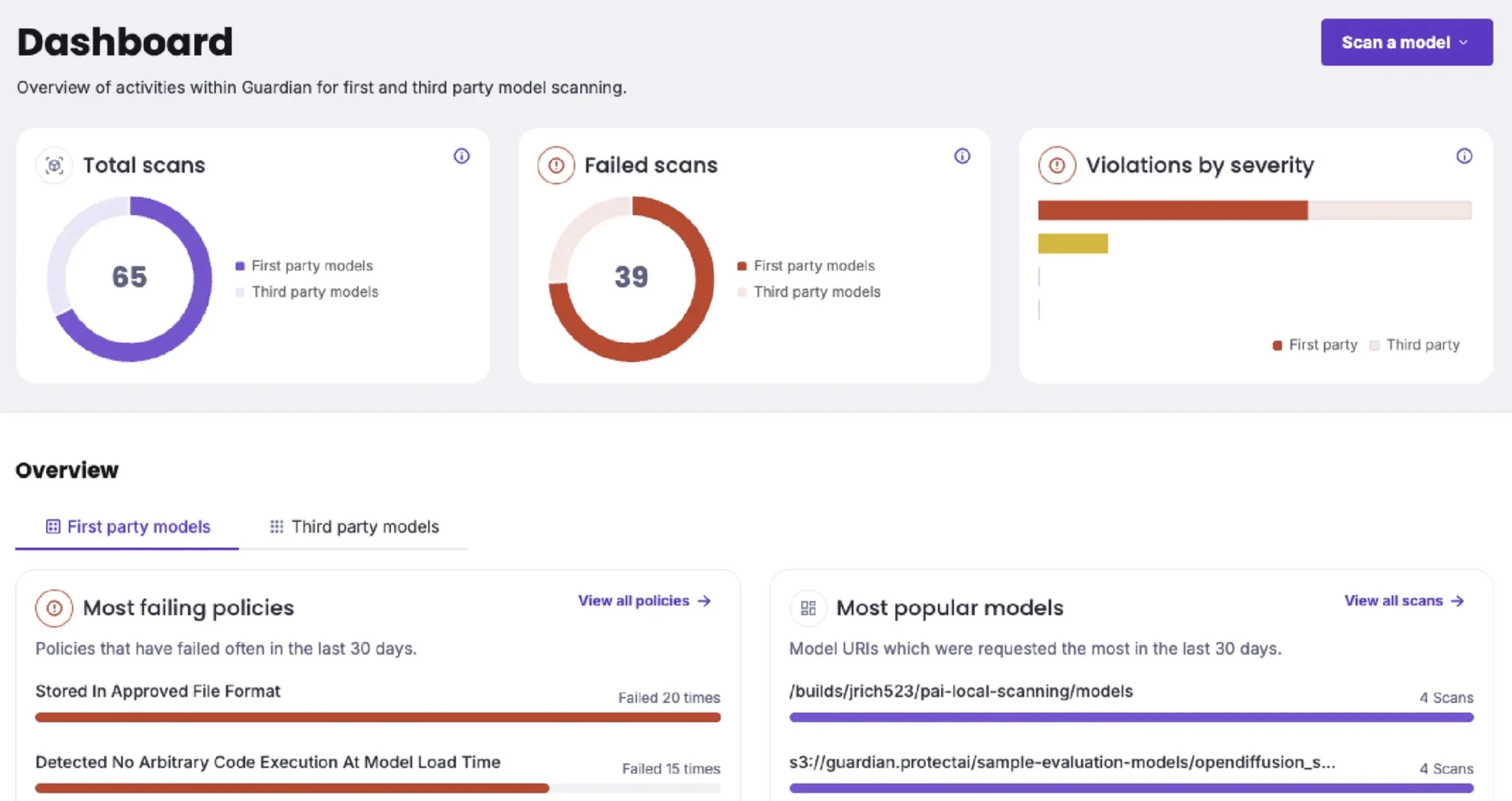
Protect AI secures the AI supply chain by checking models, containers and packages for hidden threats and unsafe code. It applies security rules and monitors dependencies to help organizations safely use third-party and open-source AI models.
PointGuard AI
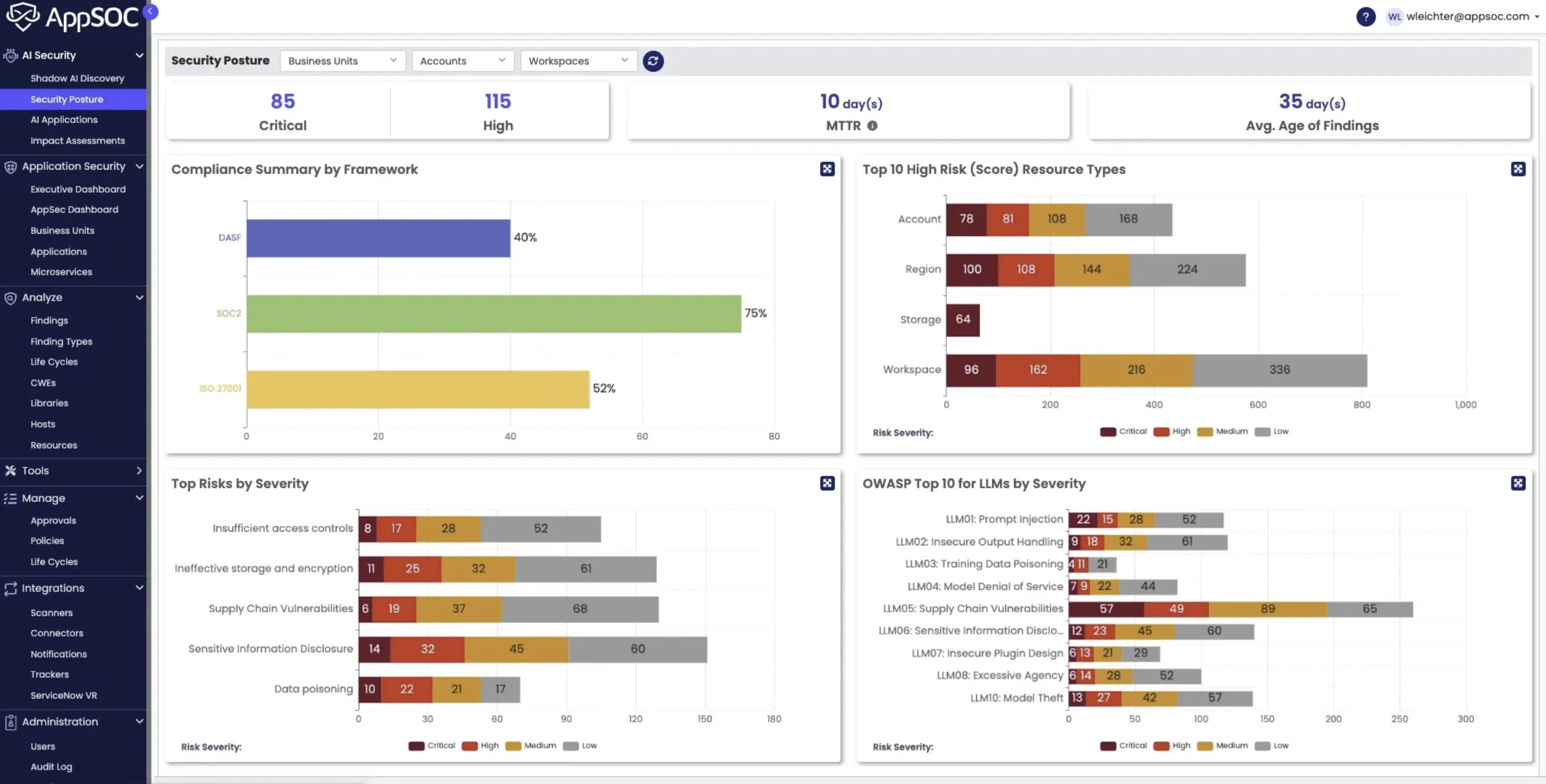
PointGuard AI specializes in real-time protection for AI-driven applications, with a strong emphasis on privacy, access control and threat detection. PointGuard AI tracks how models are used, including their prompts and responses, to spot unusual behavior, data theft attempts and unauthorized access in real time.
The Future of AI Security Testing Tools
As AI becomes central to cybersecurity and critical infrastructure, testing tools must evolve to match the scale, complexity and independence of modern systems.
AI-driven Automation and Adaptive Testing
AI-powered testing tools of the future will automate attack simulations, find weaknesses and fix them automatically. They will adjust tests in real time based on how models behave, allowing continuous, smart testing that cuts false alerts and shortens response time.
Integration with AI Governance and Compliance Frameworks
Laws such as the EU AI Act, NIST AI RMF and India’s new AI policies will shape future testing standards. Upcoming AI security tools will include built-in compliance tracking, automated reporting and audit support to ensure alignment with governance rules.
Federated and Collaborative Testing Ecosystems
Organizations will use shared testing systems that safely exchange anonymous threat data across industries to defend against new and growing attacks. This information sharing will help organizations spot global attack trends and strengthen security. AI security testing will no longer be done in isolation but as a connected system that protects multiple organizations.
Runtime Defense Integration
Testing will move beyond development and act as a live, ongoing defense layer. Tools will integrate with runtime monitoring systems to detect and stop adversarial activity as it happens. Platforms like Akto are advancing unified pipelines that merge testing, monitoring and mitigation into one continuous framework.
Explainability-Focused and Trustworthy AI Validation
Future AI security testing platforms will focus on explainability to keep model decisions clear and defensible. They will evaluate not just technical strength but also fairness, bias and accountability. This will create AI systems that are secure, transparent and consistent with ethical and regulatory expectations.
Final Thoughts
By using specialized AI security testing tools and continuous validation, organizations can secure their AI assets, ensure reliability and maintain trust in intelligent automation. Using dedicated AI security testing tools and integrating continuous testing into agentic workflows will help organizations secure their AI assets and maintain trust in the age of intelligent automation.
Akto enables security engineering teams to protect AI systems using an advanced AI Security testing tool through automated red-teaming, live monitoring, and compliance-ready testing. Its unified platform integrates into CI/CD pipelines to continuously test and validate LLMs, APIs, AI agents, and MCP-based workflows. With full visibility into AI-to-API and agent-to-tool interactions, Akto helps organizations detect risks early, prevent data leaks, enforce security policies, and maintain control over autonomous systems. Schedule an Agentic Security demo with Akto today!
Related Links

Experience enterprise-grade Agentic Security solution