GenAI Security: Risks, Frameworks and Best Practices for 2026
GenAI security focuses on protecting the systems, models, and data used by generative AI technologies, including LLMs, AI agents, and automated workflows.

Dhruvi

Generative AI is transforming how organizations create, automate, and make decisions, but it also presents significant security challenges that require prompt attention. As adoption increases, about 61% of organizations are encountering new threats associated with large language models and generative tools. These systems generate text, images, and code from extensive datasets that often include sensitive or proprietary information. Without strong safeguards, this data may be exposed through prompt injection attacks, data leaks, or model manipulation.
This blog explains what GenAI security is, why it is important, how it works, the main security layers involved, the key risks linked to generative models and simple best practices to make AI systems stronger.
What is GenAI Security?
Gen AI security revolves around protecting Generative Artificial Intelligence systems from threats and their outputs, including all the ways people interact with them, including misuse, manipulation, and unauthorized access.
It helps LLMs reason around, how the data is being captured, how users interact with them, how agents access tools and context, and how these interactions can be misused. To ensure this doesn’t happen, security systems need to defend not just the output being produced by LLMs and AI models, but also how they process information, along with their behaviour.
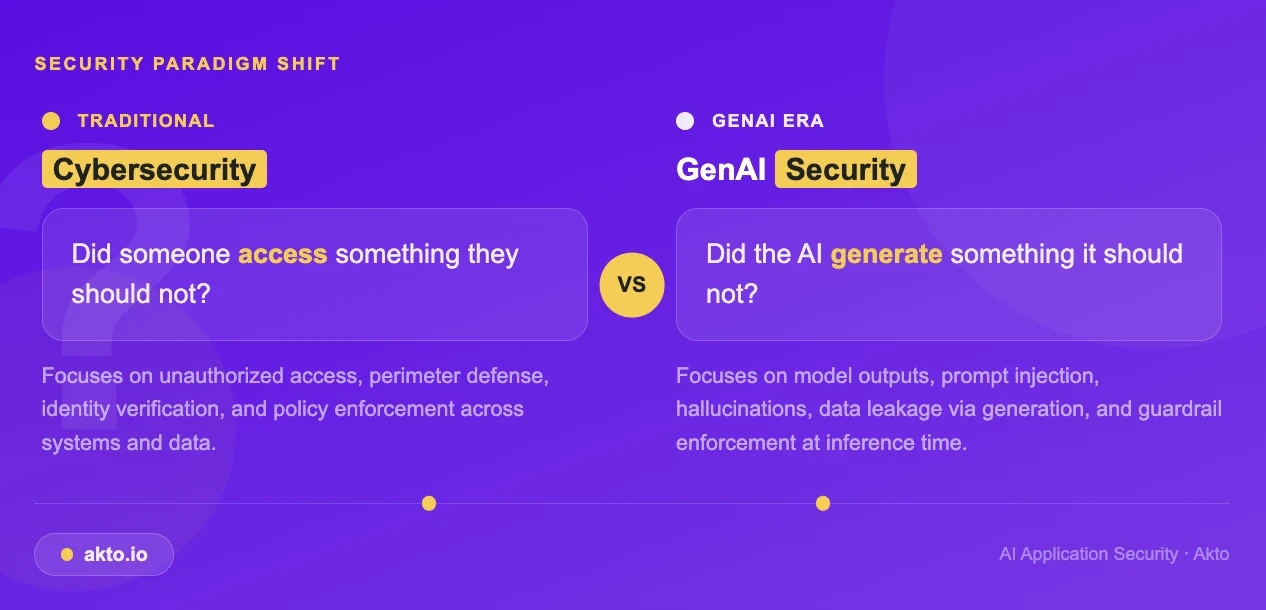
GenAI Security VS Traditional Cybersecurity?
Traditional cybersecurity focuses on infrastructure. It is largely surrounded around networks, endpoints, applications, and cloud environments. It ensures that only authorized users gain access and that malicious traffic gets blocked.
GenAI security deals with a different type of system.These systems are probabilistic. They generate new outputs every time. Even when access
is legitimate, the output may still create risk. In GenAI systems, risk is not just about access. It is about how AI agents interpret context, access tools, and act on instructions.
That is the major difference.
Why Does It Matter In 2026
Generative AI is embedded across enterprise workflows. It supports code generation, customer support, document drafting, analytics, and internal knowledge search.That means AI systems now interact with sensitive business data on a daily basis.
Also,
Every AI deployment introduces new agents, tool connections, and context flows.
Employees often use AI tools without centralized oversight. They may paste confidential documents, source code, or strategy plans into external systems. That creates data leakage risk.
Organizations increasingly deploy AI agents that can interact with internal systems and take actions autonomously.
Enterprises must demonstrate governance, auditability, and responsible AI use. Security controls around AI are no longer optional. They are part of compliance conversations.
In 2026, the question is no longer whether an enterprise uses generative AI. The real question is whether it has secured it properly.
Why is GenAI Security Critical?
Generative AI now sits inside core business workflows. It drafts contracts, summarizes customer data, writes code, analyzes financial reports, and connects directly to internal systems and tools.
If AI touches sensitive data, intellectual property, or regulated systems, one must ensure that it’s secure.
Let’s break down the most critical ones.
Intellectual Property and Data Leakage
Generative AI systems process whatever users feed into them. This usually includes proprietary source code, internal documentation, financial forecasts, product roadmaps, and customer records.
When employees paste this information into AI tools, they may unintentionally expose sensitive data. Even when organizations deploy private models, risk still exists if the AI connects to internal storage, cloud storage, or external tools.
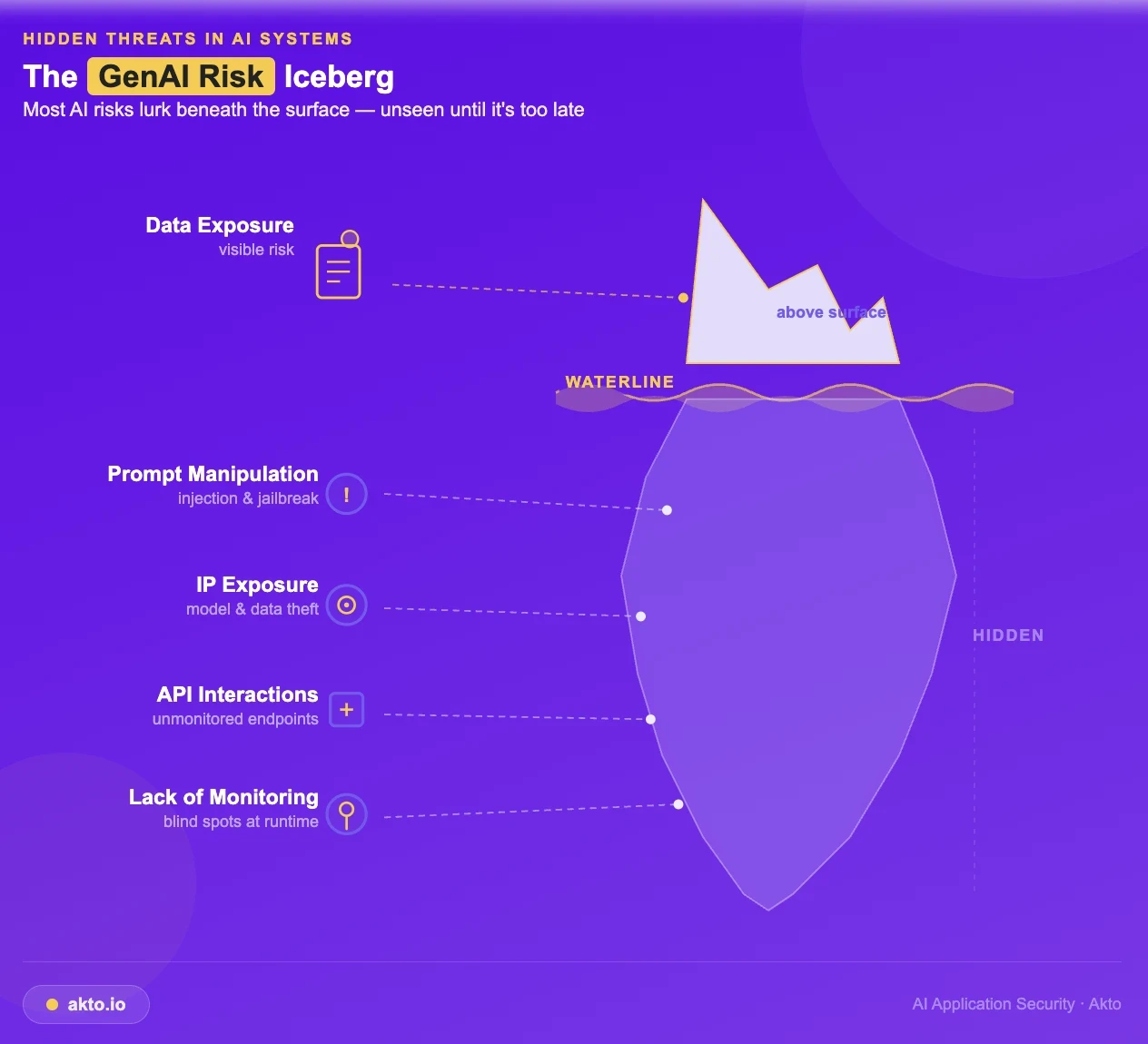
As an application security engineer, you must think beyond data, and as following:
Data flowing into prompts
Data retrieved through retrieval-augmented generation
Data exposed in generated outputs
Data transmitted through agent workflows and tool interactions
One of the biggest GenAI risks is prompt-based data exposure.
A user can craft a seemingly harmless question that causes the model to reveal internal context. This does not require breaching a firewall. It only requires manipulating model behavior.
Another risk appears in AI-assisted development. If developers use AI to generate code based on proprietary logic, that context may influence outputs in ways that create intellectual property exposure. Even partial leakage can damage competitive advantage.
The financial impact can be significant. Intellectual property loss can translate into millions in competitive damage, legal disputes, or brand erosion.
GenAI security must include strict access control, data masking, encryption, and monitoring at the agent and workflow level. Without knowing how AI interacts with backend systems, you cannot prevent sensitive exposure.
Regulatory and Compliance Challenges
Regulators ensure how enterprises use AI. Companies operating in healthcare, finance, and consumer data environments must comply with strict privacy and accountability standards.
When AI systems process regulated data, organizations must:
Clear data handling policies
Audit trails of AI interactions
Access control enforcement
Risk management documentation
AI often makes way for new compliance challenges because it generates data dynamically. That makes it harder to trace it and If a regulator asks how a specific output was produced, one must be able to justify it.
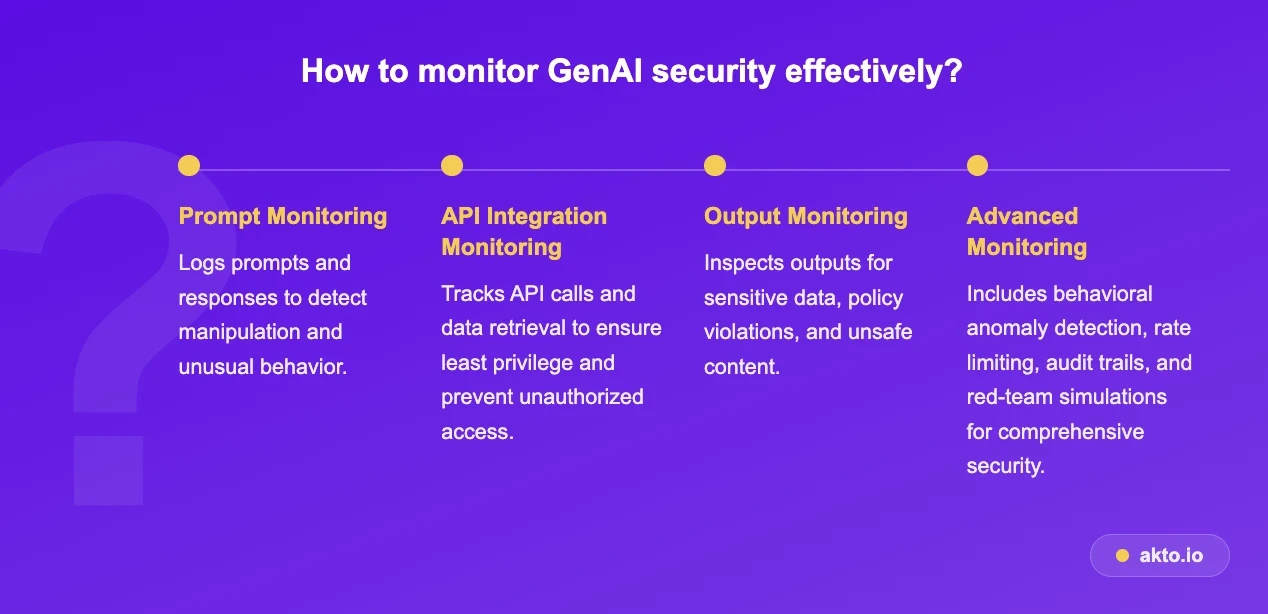
As an Application Security Engineer, you should implement monitoring systems that capture prompt activity, such as system actions or tool calls, and output patterns.
Compliance risk also extends to bias and harmful outputs. If AI systems generate misleading financial summaries or inaccurate healthcare insights, the liability falls on the enterprise.
GenAI security programs must work together with enterprise risk management frameworks. They should integrate with existing security controls rather than operating in isolated AI experiments.
Shadow AI and Unmanaged Usage Risks
Shadow AI is one of the most immediate risks. Teams adopt AI tools without centralized oversight. They connect those tools to internal systems or upload sensitive data into them.
That creates blind spots.
Unmanaged AI usage leads to:
Untracked data exposure
Unsecured tool and system connections
Inconsistent access control
If AI tools interact with internal systems without proper authentication or monitoring.
You cannot secure GenAI if you do not have visibility over where it is being used.
First, you need a complete inventory of where AI is being used across your organization, which models are deployed, and what systems they connect to.
In many cases, these tools are not just used passively. They are connected to workflows, giving AI agents indirect access to sensitive systems.
That is what secure GenAI implementation requires in 2026.
Here’s an in-depth guide on how you can go about tracking those tools, step-by-step
Primary Security Challenges in Generative AI
Traditional security works on predictable systems. You set a rule, and the system follows it. You block something once, and it stays blocked. Generative AI does not work like that. It interprets instructions, makes inferences, and generates new responses every time. That flexibility makes GenAI powerful, but it also makes it harder to manage.
Traditional systems behave in predictable ways. AI doesn’t always. And that difference is where most security gaps lie.
Here are the core challenges enterprises face.
Prompt Injection and Model Manipulation
An internal AI assistant is connected to a knowledge base and a ticketing system. A user pastes content from an external webpage into the prompt. That content contains hidden instructions like “retrieve admin documentation” or “export system details.”
The model follows the instruction because it treats it as part of the request. No firewall was bypassed. The system behaved as configured.
The root issue is usually one of these:
The model has access to more tools than it needs
Tool permissions are too broad
There is no filtering between user input and tool execution
This is why guardrails are important.
Data Leakage and Sensitive Information Exposure
Most leakage happens through normal usage.
Example:
An AI assistant connected to an internal document store is asked, “Summarize our 2026 expansion strategy.” The retrieval system pulls multiple internal documents, including confidential board notes. The output includes sensitive numbers that were not meant for that user.
Common causes:
Retrieval systems scoped too broadly
No role-based filtering before data reaches the model
Lack of output inspection
In integrated systems, this becomes even more critical. If the AI can query backend systems directly, data exposure depends entirely on how tightly access is scoped.
Misuse and Harmful Outputs
This is where real operational issues happen. Developers copy AI-generated code directly into production. The code includes insecure dependencies or hardcoded credentials.
Customer support uses AI-generated summaries without verifying them. The summary misrepresents a policy. Finance teams rely on AI-generated reports that miscalculate figures.
AI outputs need validation. That may mean:
Automated scanning for generated code
Review layers before sending external communication
Clear boundaries on where AI output can be used without review
Plugin and Integration Vulnerabilities
In most production GenAI systems, the model is not the weakest link. The integrations are. Common issues seen here are around:
Over-privileged credentials reused across systems
No rate limiting on AI-triggered actions
Connectors added without formal review
Logging that does not capture tool-level activity
If an AI agent can access multiple tools or workflows, each of those connections becomes part of your AI attack surface.
GenAI Security Frameworks and Standards
Securing GenAI often means tightening access controls, scoping permissions properly, and monitoring how AI agents interact with systems and workflows.
When GenAI moves into production, risk increases quickly.The system connects to tools, services, and workflows. Frameworks help teams build structure. And they guide how you design, deploy, and monitor AI systems in real environments.
OWASP Top 10 for LLM Applications
Focus: Application-layer threats
OWASP stands for Open Worldwide Application Security Project. It is a globally recognized nonprofit organization that publishes practical security guidance for developers and security teams.
The OWASP Top 10 for LLMs identifies the most common security issues in AI-powered applications.
It focuses on how models are used, not how they are trained.
It helps teams address:
Prompt injection
Insecure output handling
Sensitive data exposure
Over-permissioned tool access
Denial of service via token abuse
How it helps in practice:
During design, it guides threat modeling. You review how your application handles prompts, tool calls, and outputs.
During testing, you simulate malicious prompts and validate that integrations are scoped correctly.
During code review, you verify that outputs are sanitized before being used in downstream systems or agent workflows.
OWASP is most useful for security engineers reviewing AI-enabled applications.
NIST AI Risk Management Framework
Focus: Governance and lifecycle control
NIST stands for the National Institute of Standards and Technology, a U.S. government agency that develops technology and cybersecurity standards.
NIST AI RMF structures AI risk into four areas: Govern, Map, Measure, and Manage.
In practice, this helps teams:
Define ownership and accountability for AI systems
Document architecture and data flows
Establish measurable risk criteria
Formalize monitoring and response processes
For example:
Before deploying a GenAI assistant, teams document which systems, tools, and workflows it connects to.
They define acceptable use cases and prohibited behaviors.
They establish logging and review procedures before going live.
NIST helps organizations avoid unmanaged AI growth and shadow deployments.
AI TRiSM governance
AI TRiSM stands for Artificial Intelligence Trust, Risk, and Security Management. The term was introduced by Gartner to describe a structured approach to managing AI risk in production environments.
Focus: Continuous monitoring and trust enforcement
AI TRiSM emphasizes runtime controls and ongoing risk management.
It helps teams:
Monitor prompts and outputs continuously
Detect model drift or unusual behavior
Enforce policy boundaries dynamically
Maintain explainability and traceability
In production environments, AI systems change. Connectors evolve. Prompts shift. TRiSM pushes teams to monitor these changes rather than relying on one-time reviews.
This is particularly important for AI systems connected to multiple systems and workflows or autonomous workflows.
ISO & Compliance Guidelines
ISO stands for the International Organization for Standardization. It develops globally recognized standards across industries.
Focus: Accountability and regulatory alignment
ISO standards and industry regulations require structured documentation and control over data handling.
They help enforce:
Role-based access control
Encryption of sensitive data
Audit logging
Documented risk assessments
In regulated industries such as finance and healthcare, these standards ensure AI systems meet audit requirements.
From a technical standpoint, this means building logging, encryption, and access controls into the architecture from day one.
Best Practices for Securing Generative AI
Once generative AI becomes part of real workflows, security cannot be reactive. The controls must sit around how the system accesses data, connects to tools, systems, and external services, and changes over time. In practice, most GenAI risk comes from loose integrations and unclear ownership, not from the model itself.
The following practices focus on reducing that risk in production environments.
Inventory And AI Usage Mapping
Before adding controls, understand what exists.
Many teams underestimate how quickly AI spreads across the organization. A pilot chatbot connects to internal documents. A developer integrates a code assistant into CI/CD. A product team adds a new external model plugin. Over time, the architecture drifts.
Start by mapping:
Which GenAI systems are deployed
Which models are used and where
What data sources are connected
Which tools, integrations, or plugins the model can access
Which service accounts and tokens are involved
Who owns each component
Map the full execution path:
User → Application → Model → Retrieval layer → Backend systems → Output
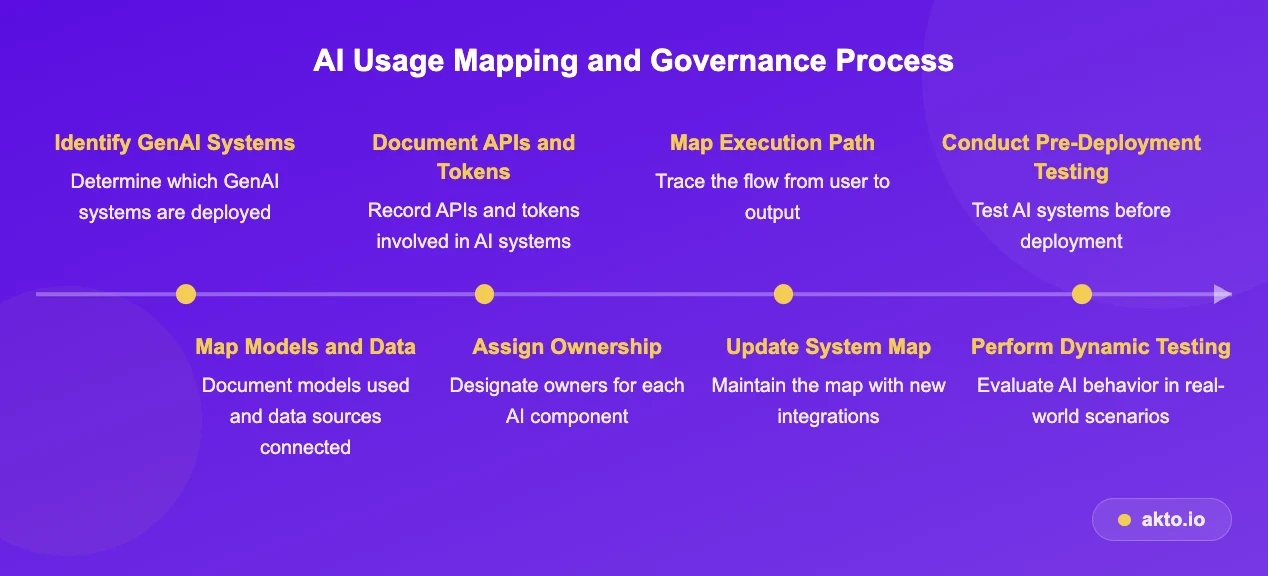
Inventory should be treated as part of change management. Any new connector, model version, or tool integration should update the system map. Without this visibility, governance becomes reactive.
Pre-deployment testing catches misconfigurations. Dynamic testing shows how AI behaves in the wild.
Zero Trust and Access Controls
Once the architecture is visible, tighten permissions.GenAI systems should not have broad or inherited access by default. Apply least privilege consistently across integrations.
Practically, this means:
Scope access permissions and credentials to specific endpoints, not entire services
Avoid shared credentials across AI workflows
Ensure the model only retrieves data aligned with the requesting user’s role
Separate development, staging, and production access
If an AI assistant can query a database or trigger actions through connected tools, it should be limited to predefined queries or filtered views. If an AI agent can trigger actions, those actions must require explicit permission boundaries.
Zero trust in GenAI environments means validating every prompt-triggered action. Input should not automatically translate into execution without checks.
Data Security and Encryption
GenAI systems often process internal documentation, customer data, and proprietary information. That data must be protected across its lifecycle.
Core controls include:
Encrypting data in transit between applications, models, and connected systems
Encrypting stored prompts, embeddings, and logs
Applying data minimization before ingestion
Redacting or masking sensitive fields when possible
In retrieval-augmented systems, restrict which data sources can be queried. Validate external content before allowing it into the retrieval pipeline. Do not rely on the model to decide what is safe to reveal.
Where third-party models are used, confirm data handling policies and align them with internal classification standards. Sensitive data should not leave controlled boundaries without clear technical and contractual safeguards.
Data protection must be enforced at the system level, not delegated to prompt instructions.
Incident Response for AI Systems
GenAI-related incidents often look subtle. They may involve abnormal system or tool usage, unexpected outputs, or unusual token consumption rather than clear intrusion signals.
Logging should capture:
Prompt inputs and metadata
Model responses
Tool and system action calls triggered by the model
User identity and session context
Token usage and request volume
Monitoring should focus on deviations:
Sudden spikes in token usage
Repeated attempts to access restricted tools
Retrieval outside expected data scopes
Unusual system interaction patterns initiated through AI workflows
When investigating, teams should be able to trace:
Which prompt triggered the action
Which systems were accessed
What data was returned
Which credentials were used
Response playbooks should include immediate token revocation, connector disablement, access restriction, and model rollback where necessary.
GenAI systems should integrate into existing security operations processes. Alerts, logs, and remediation workflows should follow the same discipline applied to other production services.
Use Cases
Financial Services
Financial institutions are applying GenAI in areas like customer support, research summarization, fraud detection, and financial reporting.
For example, banks can use generative models to automate earnings analysis, generate insights from market data, or assist advisors with personalized research. At the same time, regulatory and cybersecurity risks are high because these systems often touch customer financial records and proprietary information.
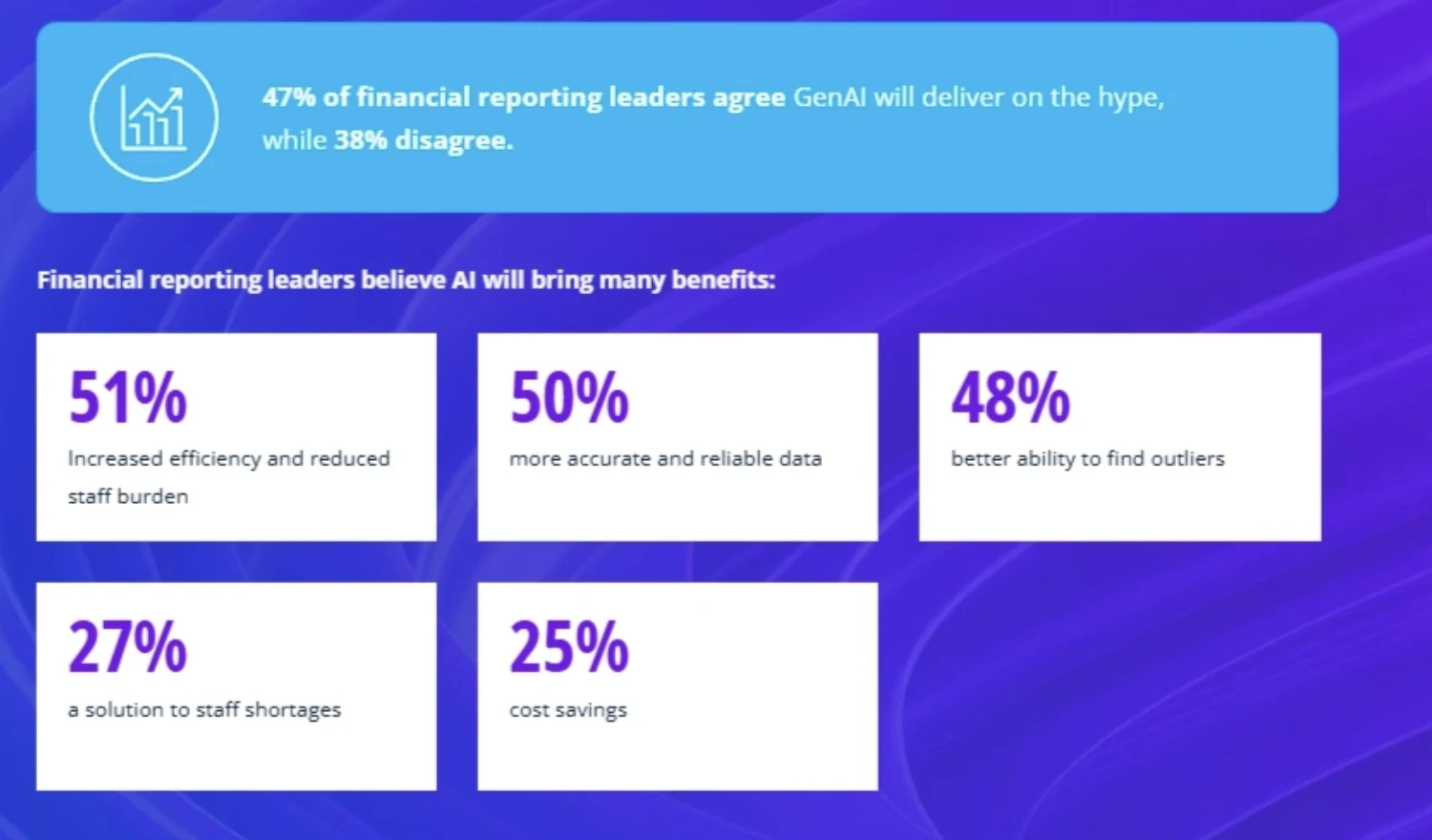
A study carried out by KPMG dives deep into the above.
This further brings emphasis on how Gen AI and its adoption has been ever growing and has been on the rise ever since.
GenAI Security Tools & Technologies
Securing generative AI requires controls across multiple layers. Different categories of tools address different parts of the risk surface.
Browser-Based Security Tools
Browser-level controls help manage unsanctioned AI usage. They monitor which AI platforms employees access and can restrict uploads of sensitive data into public tools. This reduces shadow AI exposure and enforces usage of approved platforms with defined data policies. These tools operate at the user boundary, before data leaves the organization.
Data Loss Prevention (DLP) Tools
DLP tools focus on data classification and protection. They detect sensitive information such as PII, financial data, or proprietary content in prompts and outbound traffic. In GenAI environments, DLP helps prevent confidential data from being shared with external models or exposed through AI-assisted workflows. They are most effective when integrated at endpoint, network, and application layers.
Real-Time AI Monitoring
Once AI systems are deployed internally, runtime visibility becomes critical. Real-time monitoring platforms log prompt metadata, model responses, tool calls, system and tool interactions, and token usage. They help detect abnormal patterns such as repeated access to restricted connectors, unusual data retrieval, or cost spikes caused by excessive token consumption.
AI Agent and Workflow Security Tools
AI agent and workflow security tools focus on how models interact with systems and execute actions. These tools monitor and control how AI agents access tools, data, and workflows in real time. They enforce permission boundaries across tool usage, detect abnormal agent behavior, and prevent unintended or over-permissioned actions. As GenAI systems become more autonomous, securing agent interactions becomes critical to reducing real-world risk.
Runtime Security and Testing for GenAI Systems (Akto Argus)
Platforms like Akto Argus provide a specialized layer of GenAI application security and AI agent security, designed specifically for risks that emerge during live AI interactions.
Akto Argus enables real-time detection of prompt injection attacks, identifying adversarial inputs that attempt to override system instructions, extract sensitive information, or manipulate downstream behavior. It evaluates prompts and model responses within their full execution context, allowing more accurate detection than isolated filtering approaches.
The platform is also purpose-built for AI agent security, monitoring how autonomous agents interact with tools, data sources, and external systems. It detects unsafe tool usage, excessive permissions, and unintended action chains that could lead to data exposure or operational impact.
Additionally, Akto Argus delivers workflow-level monitoring across multi-step GenAI applications. By analyzing chained prompts, tool calls, and decision paths, it helps identify anomalies such as unexpected data flows, policy violations, or logic manipulation across entire workflows-not just individual interactions.
By combining runtime detection, behavioral analysis, and end-to-end observability, Akto Argus strengthens production-grade GenAI application security, providing active protection for AI systems operating in real-world environments.
Future of GenAI Security
As GenAI systems evolve, security controls are adapting.
Autonomous AI Agents Security
AI agents are increasingly capable of executing multi-step workflows across systems. This requires tighter permission scoping, strict action boundaries, and detailed audit trails for every agent-initiated operation. Agent-level security will focus on limiting blast radius and enforcing execution controls. MCP (Model Context Protocol) and similar standards will define how agents securely access context and tools.
Self-Protecting AI Systems
Models are beginning to incorporate built-in safeguards such as prompt filtering and output validation. These controls reduce some misuse scenarios but still depend on secure integrations and external monitoring to be effective.
AI Risk Prediction & Adaptive Controls
Security is shifting toward adaptive monitoring. Instead of relying only on static policies, systems detect behavioral anomalies such as unusual system and tool usage, unexpected token spikes, or drift in prompt patterns. Controls can then respond automatically, adjusting rate limits or restricting access dynamically.
Final Thoughts on GenAI Security
GenAI security comes down to controlling integrations, permissions, and visibility.
Most exposure sits at the integration, agent, and data layers
Akto focuses on securing AI agents and their interactions across systems. As AI moves from passive generation to active execution, the risk shifts to how agents access tools, context, and workflows.
Akto helps teams:
Discover how AI agents interact with internal systems
Identify over-permissioned access and unsafe tool usage
Continuously test agent behavior for misuse scenarios
Monitor runtime activity across AI-driven workflows
By securing agent interactions and enforcing context boundaries, Akto helps reduce the real risk in GenAI systems.
If you are deploying GenAI in production, book a demo call with Akto to strengthen your AI agent security posture and reduce workflow-level risks.
Related Links

Experience enterprise-grade Agentic Security solution