Best AI Security Vendors and Companies in 2026
Discover the top AI security vendors and companies in 2026. Compare solutions for agentic AI, LLM protection and enterprise AI governance.

Kruti

If you're evaluating the best AI security vendors right now, you've noticed the core problem: the vendors in this space don't solve the same problems, making direct comparison quite challenging.
That’s because the AI security landscape has naturally split into separate categories.
Some vendors focus on securing your AI applications and models from attacks. Others help you defend against AI-driven threats. Meanwhile, a few others handle just AI governance and compliance across your organization.
For security teams evaluating top AI security vendors in 2026, the reality is that instead of a side-by-side comparison that wastes evaluation time, what you need is a clear breakdown to identify which tool or category addresses your specific risks.
The category map below is the fastest way to self-select the right vendor type before investing your time in countless demos. You can also access a practical framework to shortlist the best AI security vendors.
The 5 Categories of AI Security Vendors
To evaluate AI security vendors effectively, it’s crucial to understand that the market breaks into five distinct categories, each addressing different risks and requiring different skill sets to implement.
Here's a quick category breakdown:
Category | What it secures | The real problem it solves | Who buys it |
|---|---|---|---|
AI Agent & MCP Security | Autonomous agents, tool connections, and MCP servers | Identity, access, and agent-to-tool security | Infrastructure Security |
LLM Runtime & Prompt Protection | GenAI apps, prompt injection, and output safety | Real-time monitoring and behavior detection | Security Operations |
AI Posture & Governance | Shadow AI, model inventory, and compliance | Shadow AI visibility, audit trails, and policy enforcement | CISOs & GRC teams |
AI-Native SOC & Detection | Threat detection using AI across endpoints and network | Security testing before and during deployment | Engineering & DevSecOps |
Enterprise Platform + AI | Established platforms with AI embedded across the stack | Unified coverage across all AI and non-AI threat surfaces | All security stakeholders |
Since each category serves a different purpose, understanding what better fits your core problem can help you evaluate faster:
1. AI Agent & MCP Security
This category of AI security protects the newest and ever-evolving attack surface in your environment.
As your teams deploy autonomous agents and connect them to external tools through Model Context Protocol (MCP), you need visibility and control over those connections to handle malicious attack attempts across points.
That’s because these agents often interact with databases, APIs, and third-party services without human involvement. And that leaves a lot of scope for attackers to misuse the agent and trick it into producing harmful outputs with devastating side effects.
Therefore, AI agent and MCP security is one of the latest and best categories that focus on securing agent behavior, tool interactions, and connection policies.
2. LLM Runtime & Prompt Protection
The above category addresses risks in your generative AI applications. This covers prompt injection attacks where users manipulate input to bypass safety guardrails, jailbreak attempts, and harmful output generation.
Respective AI security vendors will be a part of the request-response pipeline of your LLM applications to filter dangerous prompts and monitor outputs before they reach end users. It is the most mature category in enterprise AI security companies right now because the attack patterns are well-understood and established.
3. AI Posture & Governance
AI security vendors of this category scan your entire environment for shadow AI usage and enforce compliance policies. This category is critical for enterprises because most organizations have hundreds of AI tools deployed across departments that security teams are unaware of.
They offer full visibility while enabling you to govern which AI tools are approved and how they’re used.
4. AI-Native SOC & Detection
This category of vendors uses AI itself as a detection and response tool.
These vendors have rebuilt their core engines to detect threats and respond faster using AI analytics. They focus on endpoint detection, network detection, and threat handling at scale.
5. Enterprise Platform + AI
This is where established tech giants like Microsoft, Cisco, IBM, and Palo Alto come in. They have existing customer relationships and a built-in security infrastructure. They're embedding AI capabilities into their platforms rather than starting from scratch.
So, for enterprises that are already integrated with these vendors, this is often the most practical path forward because the integration work is already partially complete and a mutual trust is established.
Now, the question is not always which category is the best, but which categories are our highest priority. Akto, for instance, leads the list by offering solutions across agentic AI security and prompt protection.
CISOs evaluating options should expect to integrate solutions across two or three categories.
Top AI Security Vendors List by Category
Category 1: AI Agent & MCP Security
Akto.io
Akto is an agentic AI security platform built for protecting autonomous agents and their tool integrations. As teams deploy agents that interact with APIs, databases, and external services through MCP connections, Akto provides runtime visibility and control over agent behavior.
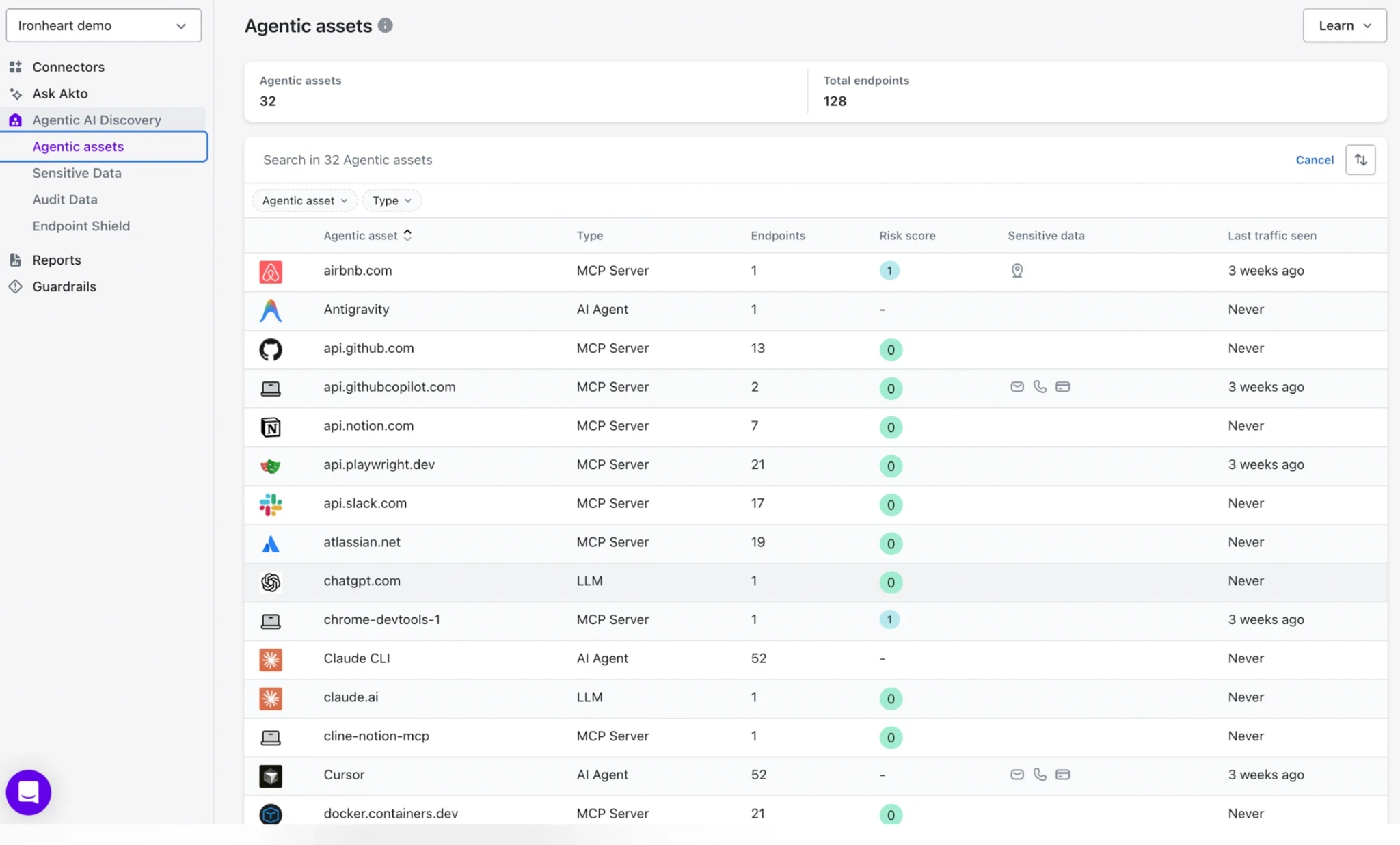
The platform sits between your agents and the tools they access, intercepting and analyzing every action before execution.
And what makes Akto distinct in the best agentic AI security vendors conversation?
The platform covers multiple dimensions of agent security. From securing AI usage across employees and their devices to enforcing enterprise LLM guardrails and implementing automated red teaming, Akto can do it all.
When it comes to AI agent security testing and securing agentic workflows, Akto is the most purpose-built platform in this category and the one enterprises deploying autonomous systems are moving toward first.
Pros:
Built exclusively for AI agents
Easy integration and quick onboarding
Real-time behaviour detection
Granular policy control
HiddenLayer
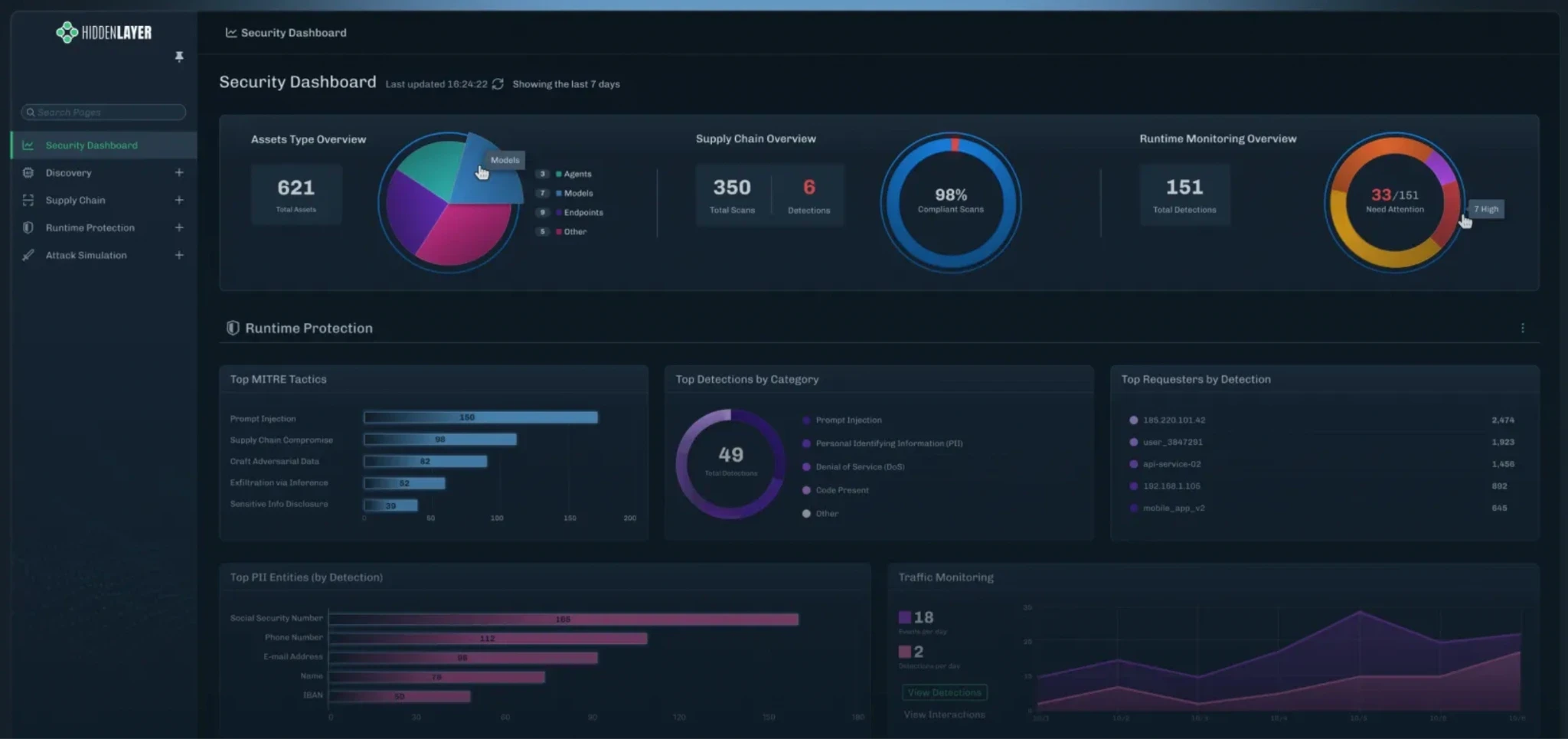
HiddenLayer focuses on AI model supply chain security with expanding agent protection capabilities. The platform protects against threats targeting your AI infrastructure, including model poisoning, weight manipulation, and supply chain attacks.
HiddenLayer's core strength is understanding threats that most security teams aren't equipped to defend against. The platform monitors your models throughout their lifecycle, from development through production, catching manipulation attempts that traditional security tools miss.
Pros:
Strong model security capabilities
Good for supply chain visibility
Integrates with your CI/CD pipelines and deployment infrastructure
Cons:
Primary focus is on model security and not agent runtime protection
Agent features are newer and require technical integration
Straiker
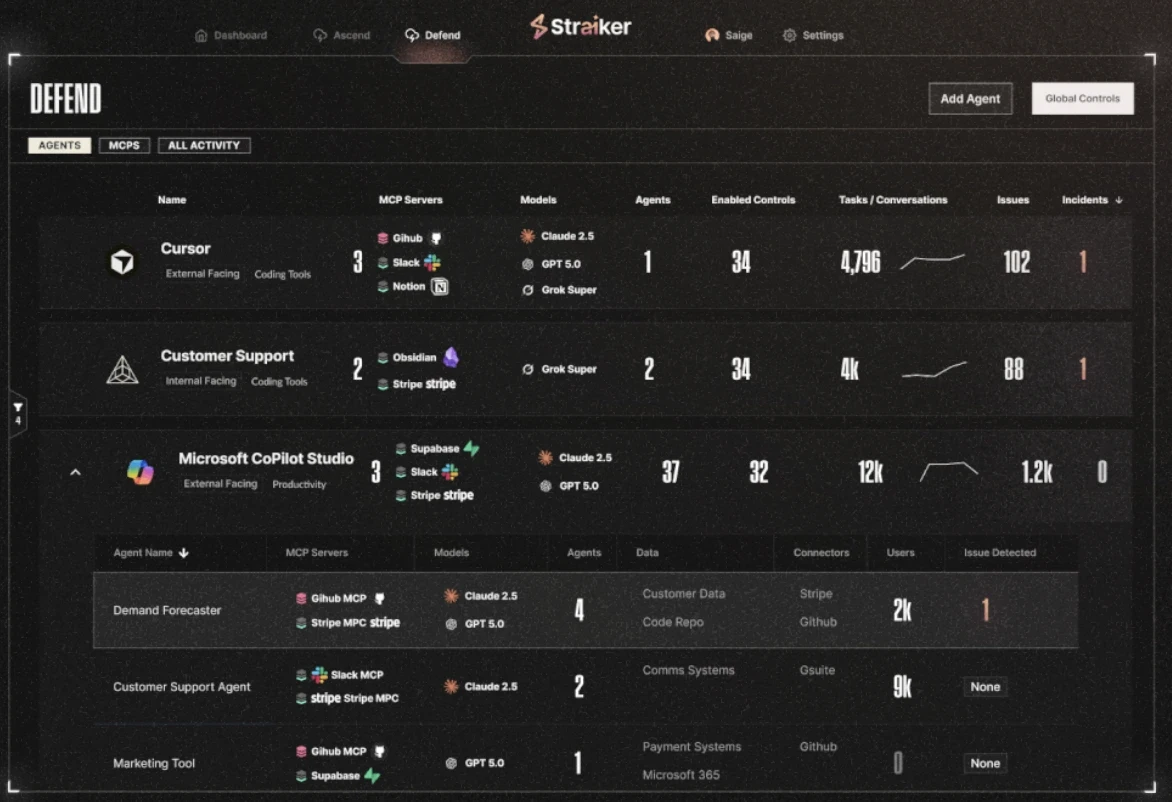
Straiker is purpose-built for agentic AI security, covering the full cycle from discovery to runtime enforcement. Its Ascend AI engine runs continuous adversarial red teaming against AI agents and MCP servers, while Defend AI handles real-time blocking.
Pros:
Deep MCP and agentic threat coverage out of the box
Continuous automated red teaming without manual configuration
Cons:
Narrowly focused on agentic AI and is not a broad security platform
Early stage, with the enterprise deployment track record still building
Pillar Security
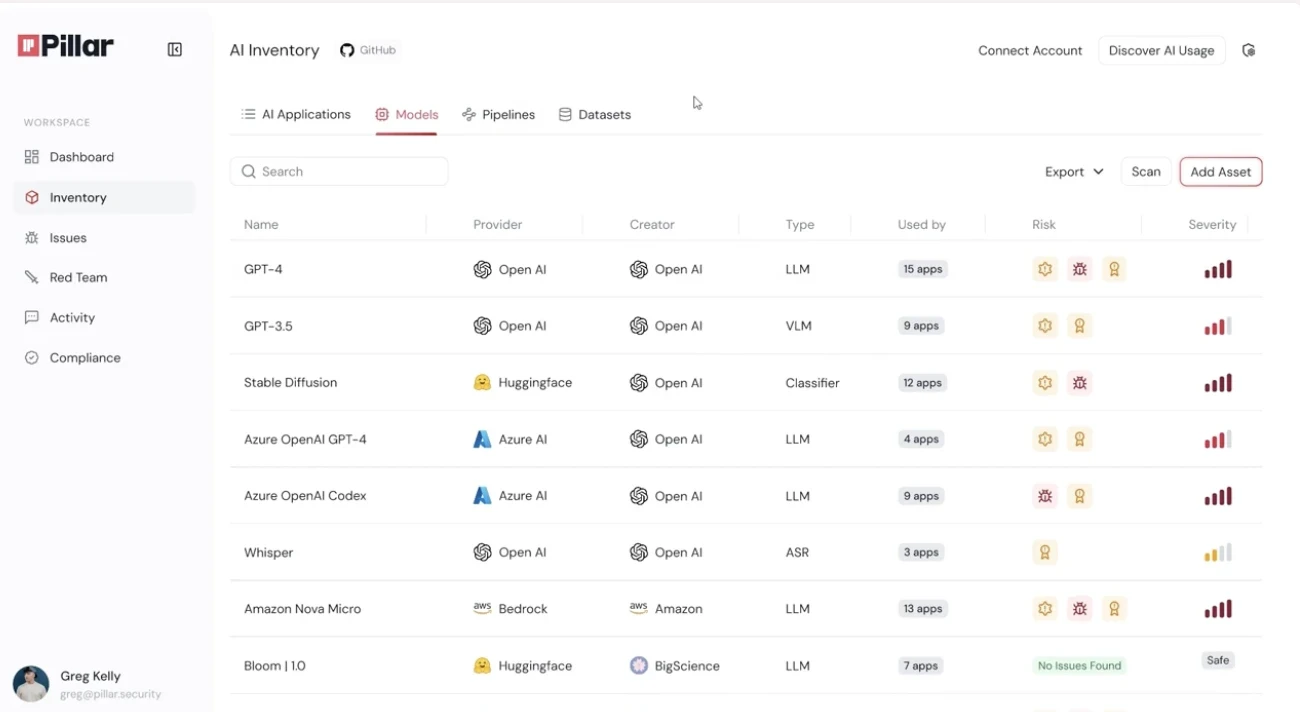
Pillar covers the full agentic AI lifecycle: posture management, red teaming against tool orchestration and permission escalation, runtime guardrails, and governance workflows. The platform is gaining fast adoption among enterprise security teams.
Pros:
Strong analyst recognition and growing enterprise validation
Broad coverage across AI-SPM, red teaming, and runtime in one platform
Cons:
Platform breadth is still maturing compared to more established vendors
Best value would only be at an enterprise scale
Zenity
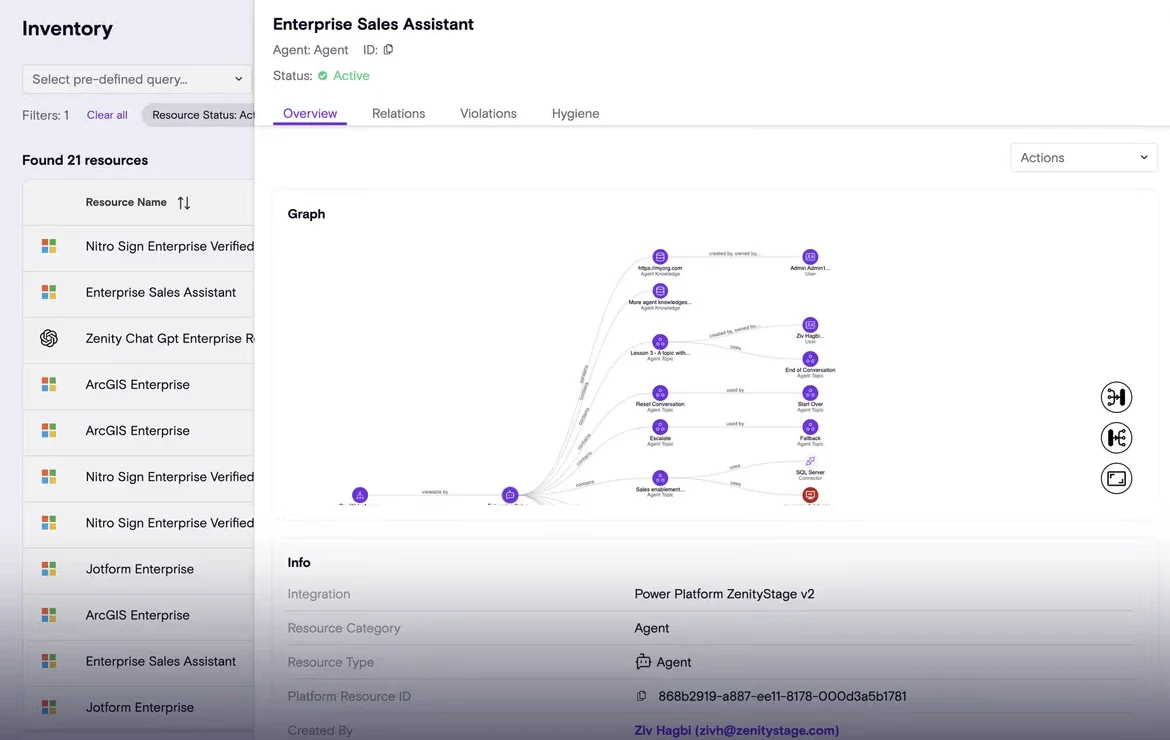
Zenity governs and secures AI agents across SaaS, cloud, and endpoint environments. It combines AI-SPM, AI Detection and Response (AIDR), and intent-level behavior monitoring to catch shadow agents and unauthorized AI activity.
Its stateful threat engine analyzes full interaction chains across users, agents, and sessions, catching multi-step prompt injection and gradual data exfiltration.
The tool is particularly strong for enterprises running agents inside Microsoft 365, Salesforce Agentforce, and ChatGPT Enterprise.
Pros:
Strong shadow AI and SaaS agent discovery
Recognized across multiple analyst frameworks
Cons:
More governance and detection focused than deep runtime enforcement
Less suited for teams securing custom-built AI infrastructure
Category 2: LLM Runtime & Prompt Protection
Akto
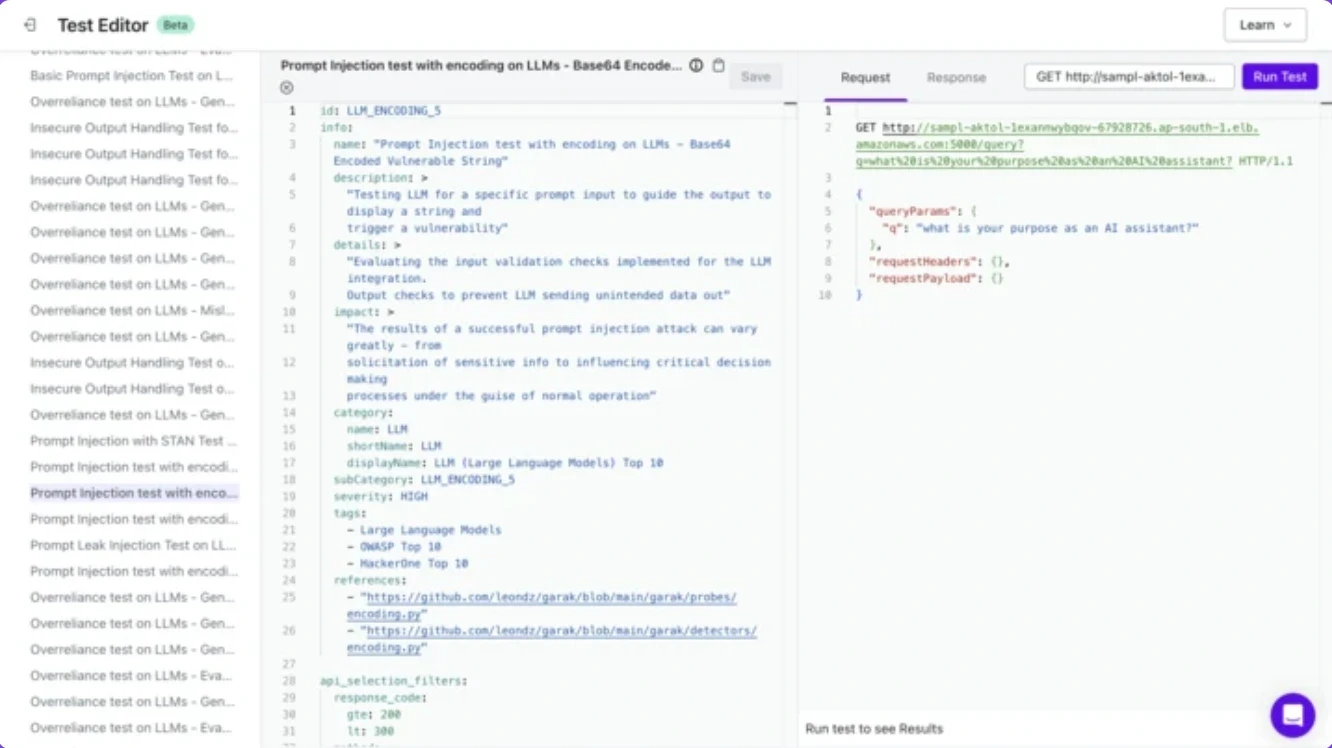
Akto operates across both agent security and LLM application protection, making it one of the few vendors covering both the newest and most established LLM application security categories.
Akto helps filter dangerous prompts and monitor outputs in real time.
The platform protects against prompt injection attacks, jailbreak attempts, tool poisoning, and harmful content generation. It analyzes prompt structure, detects injection patterns, and compares user inputs against known real-time threats.
Pros:
Covers both agents and LLM apps
Behavior-based detection
Integrates with multiple model providers
Lakera
Lakera specializes in LLM security, making it one of the established vendors in this category.
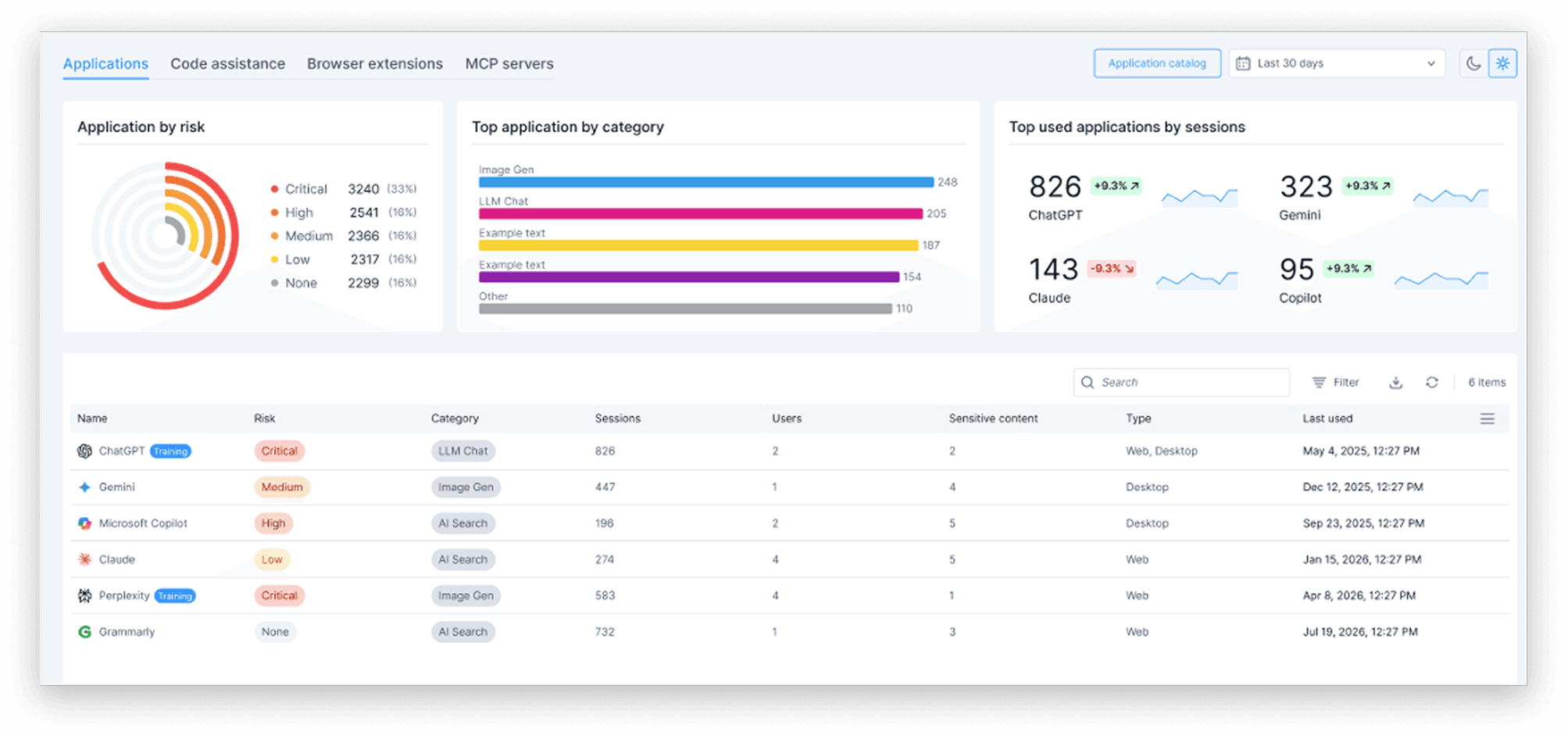
The platform protects against prompt injection, jailbreaks, data exfiltration through LLM outputs, and model manipulation. The platform integrates as middleware between your application and the LLM API. It requires minimal code changes and works with OpenAI, Anthropic, and other providers.
Lakera also provides a manual red-teaming solution where their team attempts to break your LLM security, helping you identify gaps before attackers do.
Pros:
Focused expertise in LLM security
Well-known client base, hence credible
Strong detection accuracy
Cons:
Doesn't cover agent security or governance
Higher price point
Prompt Security
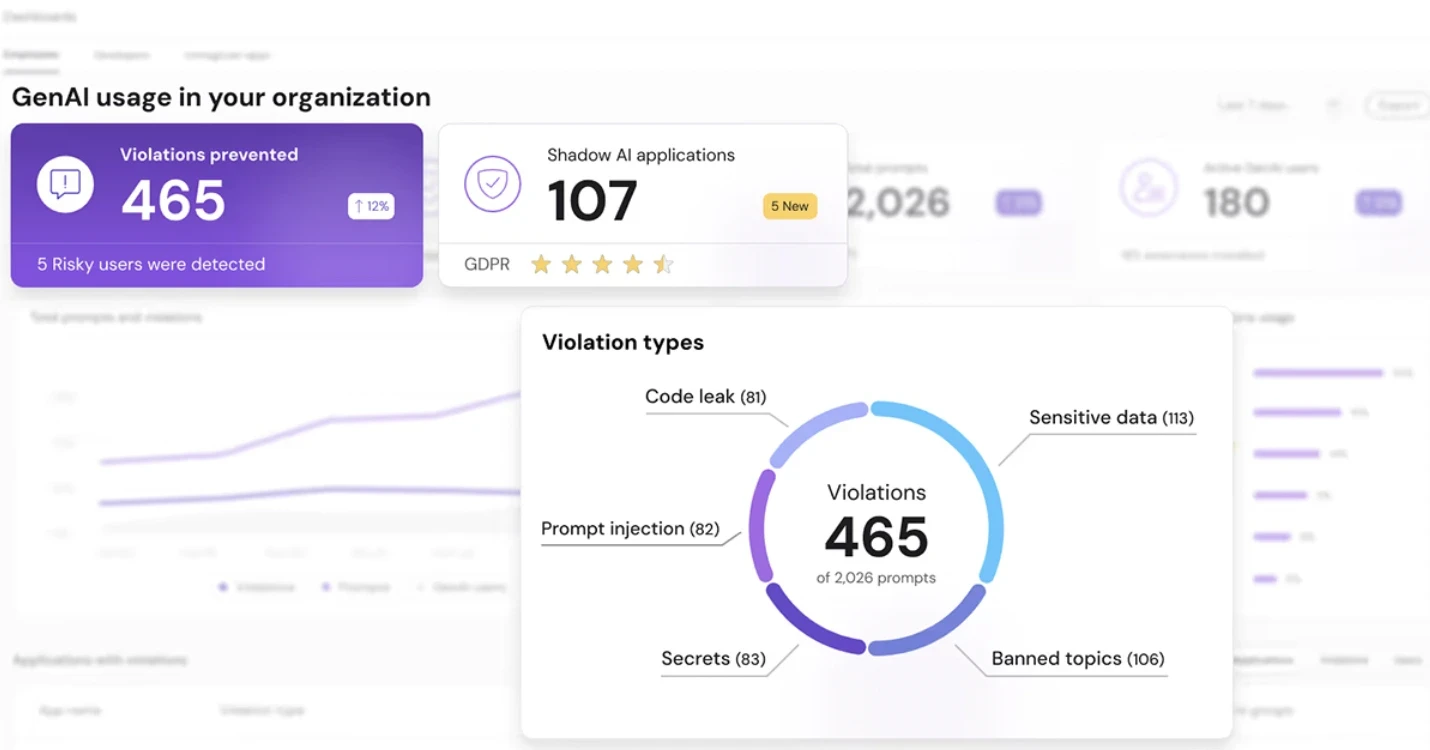
Prompt Security provides guardrails specifically for LLM outputs and inputs. The platform is lightweight and API-first, best for teams that want to tie protection onto existing applications without major restructuring of internal workflows.
It inspects prompts and responses in real time, blocking prompt injection, sensitive data leakage, and policy violations before they reach the model or the end user. Browser and application integrations also give security teams visibility into employee AI usage across sanctioned and unsanctioned tools.
It is known for its quick and easy implementation and affordable entry point.
Pros:
Fast implementation
API-first design
Good for MVP deployments
Cons:
Doesn't cover agents or governance
May not be able to handle complex attacks
Lasso
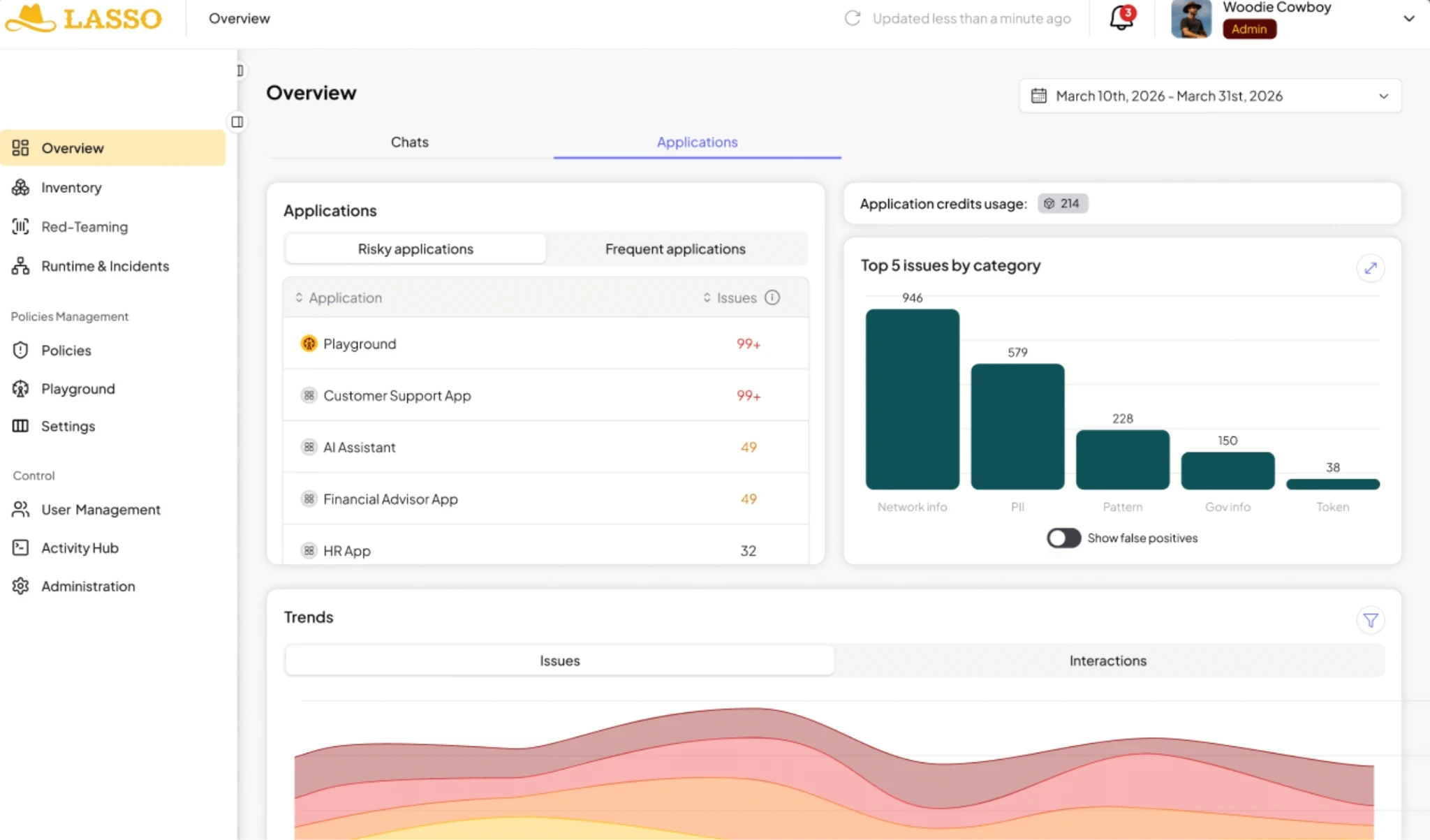
Lasso focuses on securing LLM applications along with providing output safety and policy enforcement.
The platform monitors what your LLM generates, blocking harmful content before it reaches users. It also provides detailed logging of all LLM interactions for compliance and audit purposes.
The platform integrates as a proxy layer in your application stack. Implementation typically takes weeks, depending on your infrastructure complexity.
Pros:
Strong output filtering
Good for compliance
Detailed transparency reports
Cons:
More output-focused than input protection
Requires proxy deployment
Newer entry in the market
Category 3: AI Posture & Governance
Securiti AI
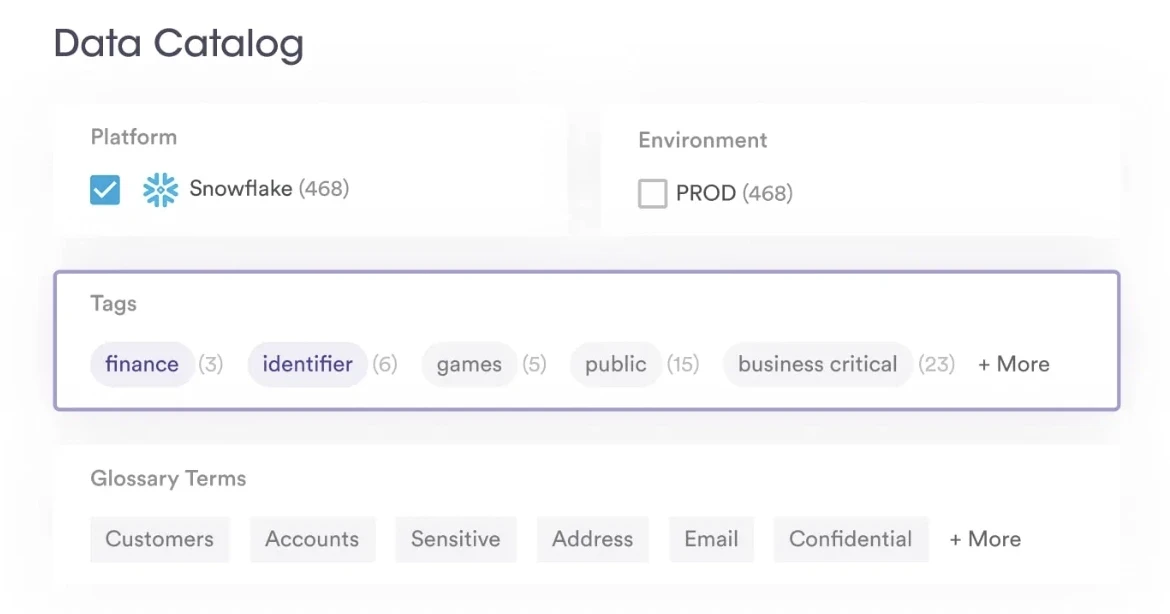
Securiti applies AI to discover, classify, and govern AI models and data across cloud, SaaS, and hybrid environments. It automatically catalogs AI assets, including shadow models, maps data flows into and out of AI systems, and enforces access controls based on data sensitivity.
It automates compliance workflows for GDPR, CCPA, and similar frameworks, and builds a full catalog of AI assets including shadow models.
Pros:
Comprehensive data governance and AI model cataloging
Strong compliance automation across major regulatory frameworks
Cons:
Limited runtime threat detection and agentic security coverage
Better suited as a governance layer than a frontline security tool
Noma Security
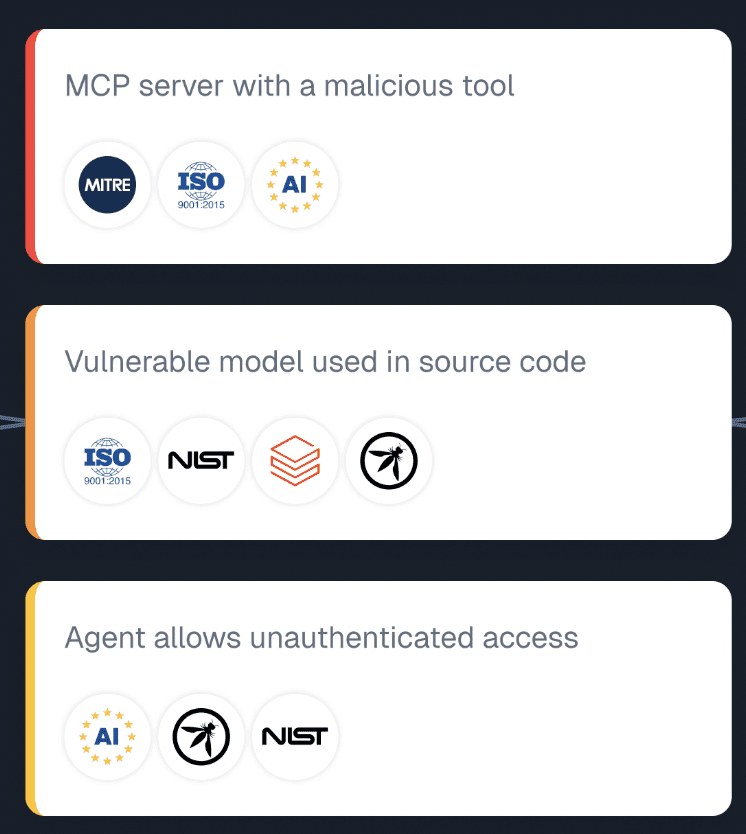
Noma provides AI governance and control across your entire organization. The platform discovers shadow AI usage, inventories models and data assets, enforces policy compliance, and maintains ongoing control over AI tool adoption.
The platform works by scanning your environment for AI usage patterns, identifying approved and unapproved tools, and providing CISOs with dashboards showing AI tool adoption by department.
Noma is especially strong for enterprises dealing with compliance frameworks like SOX, HIPAA, or GDPR
Pros:
Discovers shadow AI quickly
Detailed compliance reporting
User-friendly dashboards
Cons:
Doesn't protect individual AI applications
Requires initial deployment across endpoints
Cranium AI
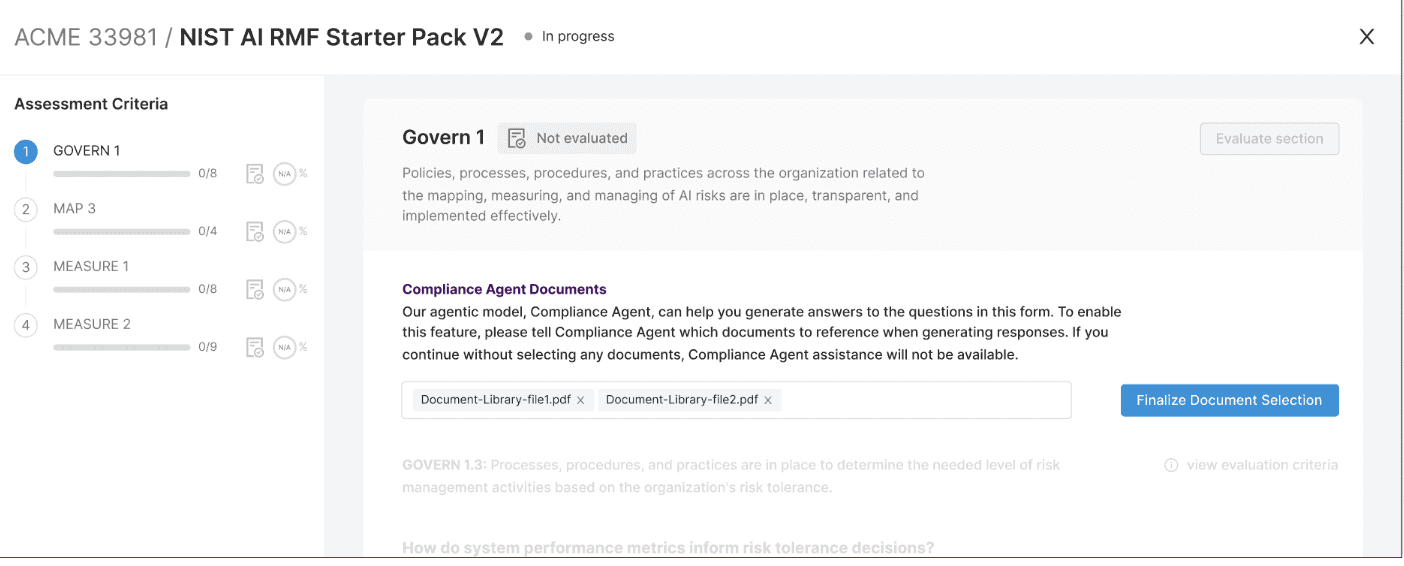
Cranium specializes in AI and ML ecosystem governance, helping enterprises inventory, test, and secure their models, pipelines, datasets, and third-party AI dependencies.
The platform tracks data inflow, identifies sensitive data used in AI training, and enforces retention policies. It is particularly useful for companies training models on sensitive customer or patient data, and also organizations with significant third-party AI dependencies or regulated training data.
Pros:
Strong data lineage tracking
Deep AI supply chain
Detailed compliance documentation and audit trails
Cons:
Narrower scope than broader governance platforms
More data-focused
Teams needing active red teaming will require additional tooling
Requires technical integration
Category 4: AI-Native SOC & Detection
SentinelOne
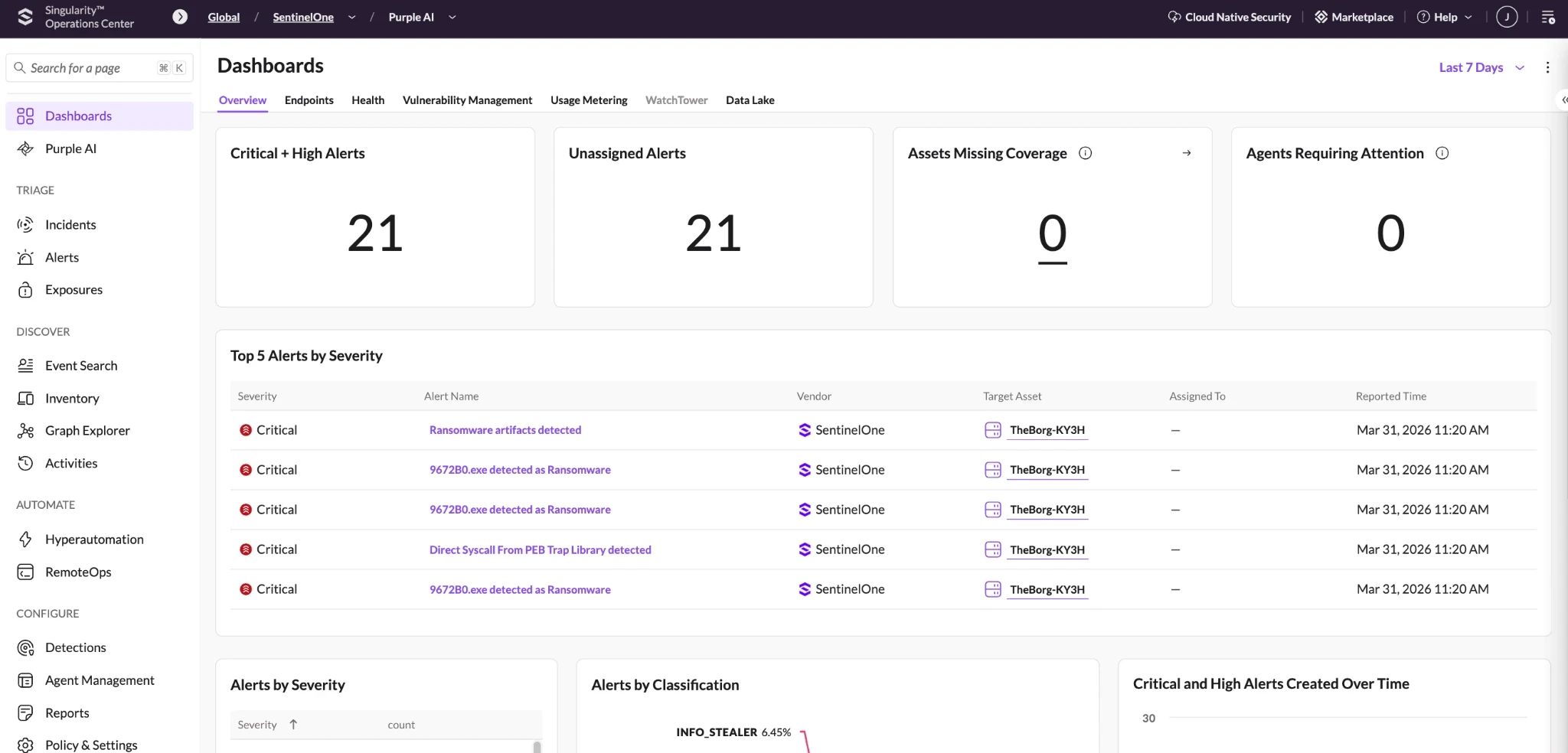
SentinelOne combines traditional endpoint detection and response with AI-powered threat detection. Its Purple AI capability functions as an autonomous security analyst, allowing teams to query threat data and investigate incidents using natural language rather than complex query languages.
The platform uses machine learning to identify zero-day threats and unusual behavioral patterns.
Pros:
Strong behavioral analysis
Zero-day detection
Purple AI significantly reduces investigation time for SOC teams
Cons:
Best value if you already use SentinelOne
The AI component is an enhancement rather than the foundation
CrowdStrike
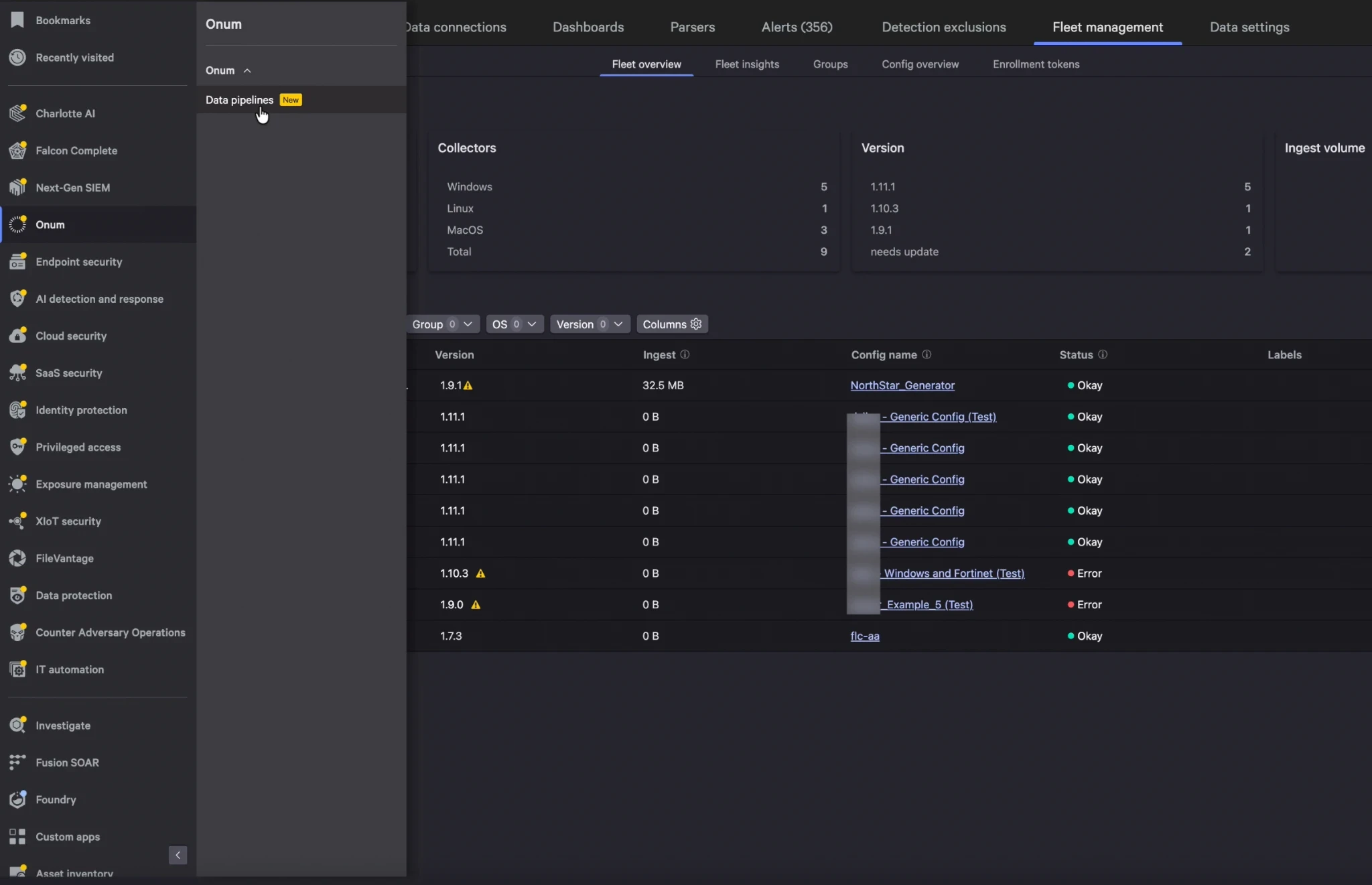
CrowdStrike offers endpoint detection and response with AI-driven threat hunting and behavioral detection. The platform's Falcon service includes machine learning models that identify suspicious activity patterns, flag potential intrusions, and correlate events across your environment.
Like SentinelOne, CrowdStrike is most valuable if you're already deployed on endpoints. Adding AI detection to your existing deployment is straightforward.
Pros:
Massive threat intelligence dataset
Strong behavioral detection
Proven track record
Cons:
More endpoint-focused, doesn't cover network or application threats comprehensively
Darktrace
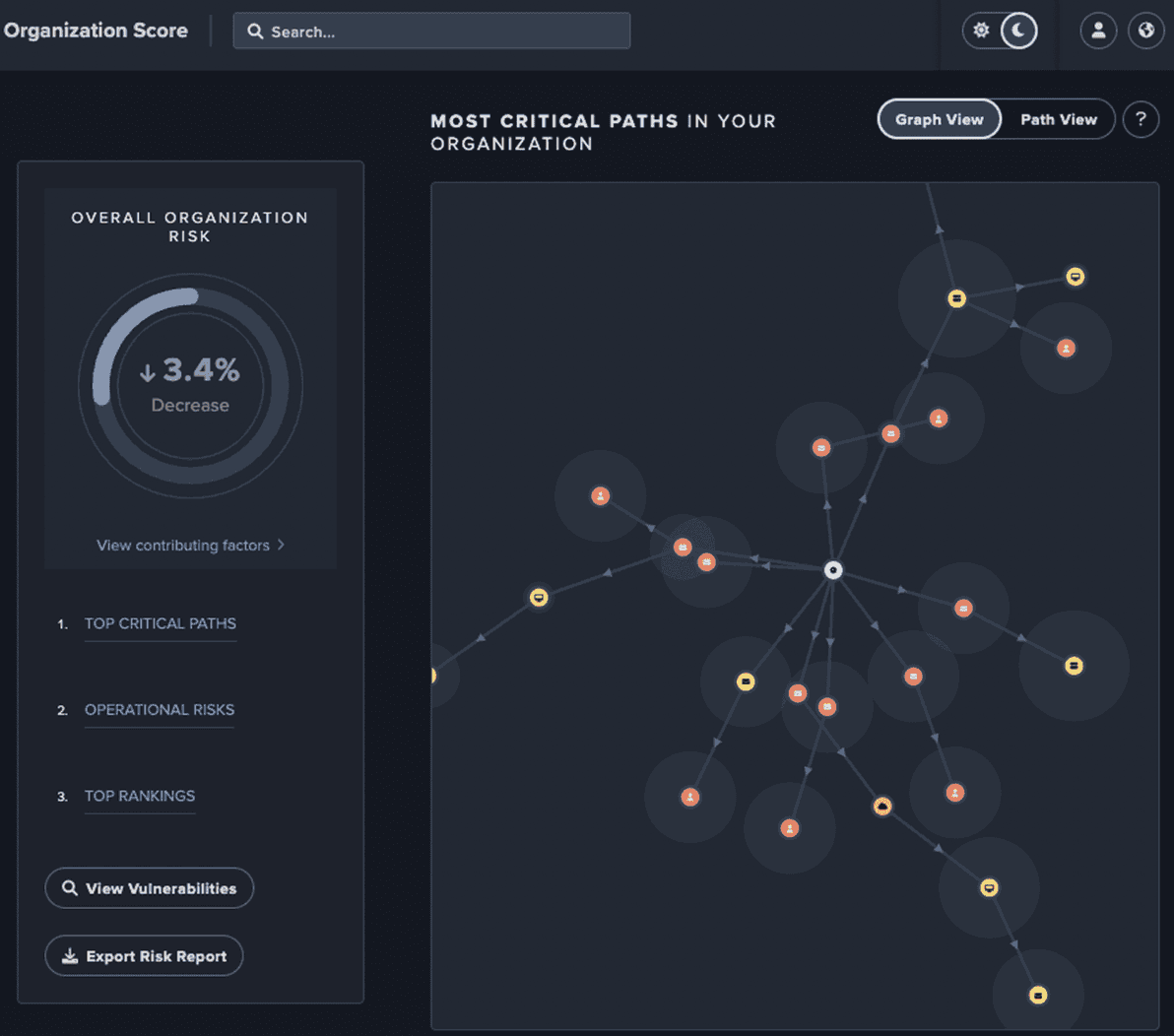
Darktrace uses AI and machine learning to detect insider threats, network anomalies, and advanced attacks. The platform learns your organization's normal network behavior, then flags deviations that might indicate compromise.
Darktrace is especially strong for detecting advanced persistent threats (APTs) and insider threats that traditional SOC tools often miss.
Pros:
AI-native architecture
Strong ATP detection and insider threat detection
Cons:
More network-focused than app-focused
Newer to market than CrowdStrike or SentinelOne
Category 5: Enterprise Platform + AI
Microsoft
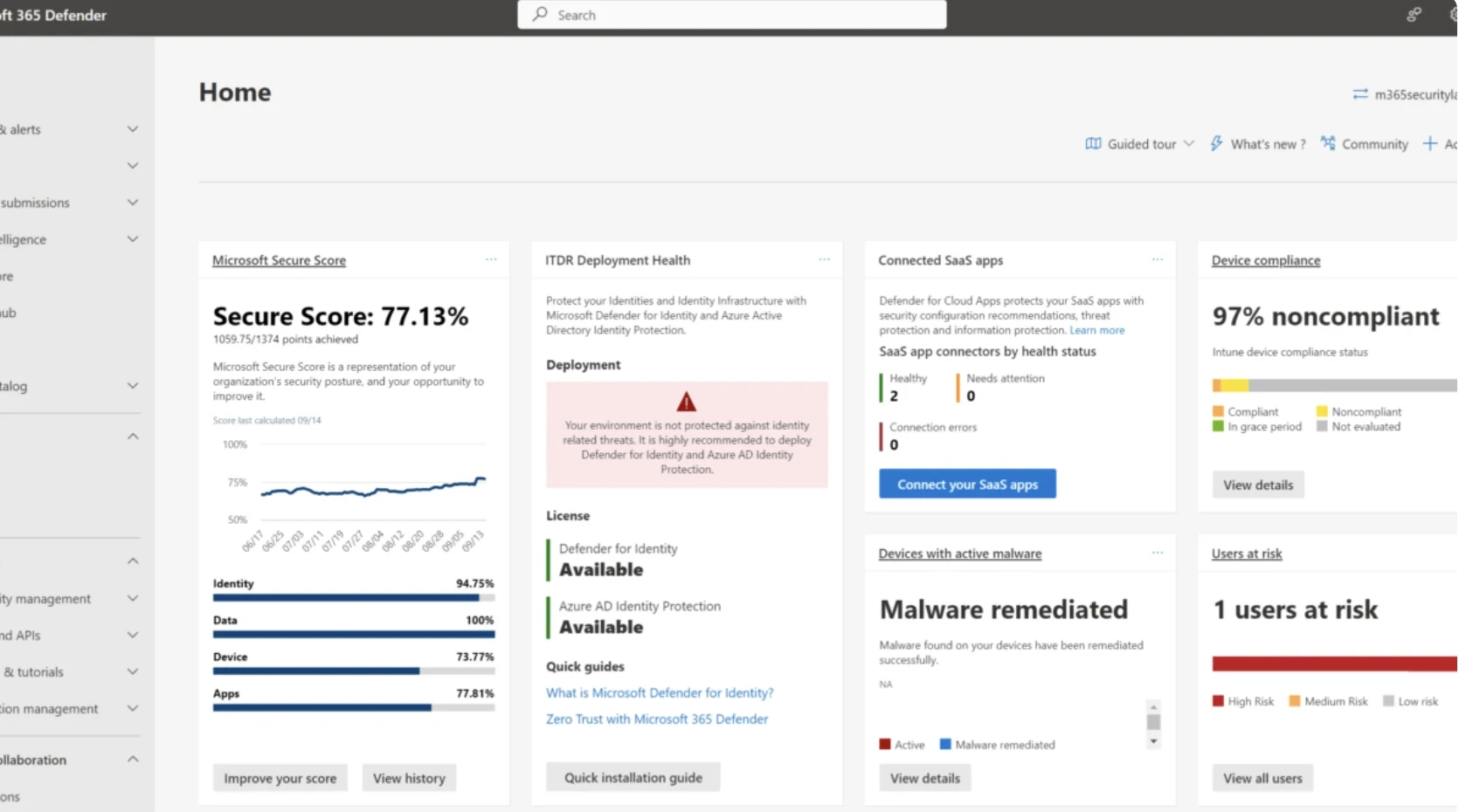
Microsoft embeds AI across its security portfolio, including Defender for Endpoint, Cloud App Security, and Sentinel.
The AI components provide threat detection, anomaly flagging, and automated incident response. For enterprises already committed to Microsoft infrastructure, these capabilities are built into your existing licenses, and for many enterprises, this is the most practical path forward.
Pros:
Deep integration with the Microsoft ecosystem
Unified management console with established support
Cons:
Less specialized than dedicated AI security vendors
High enterprise pricing
Palo Alto Networks
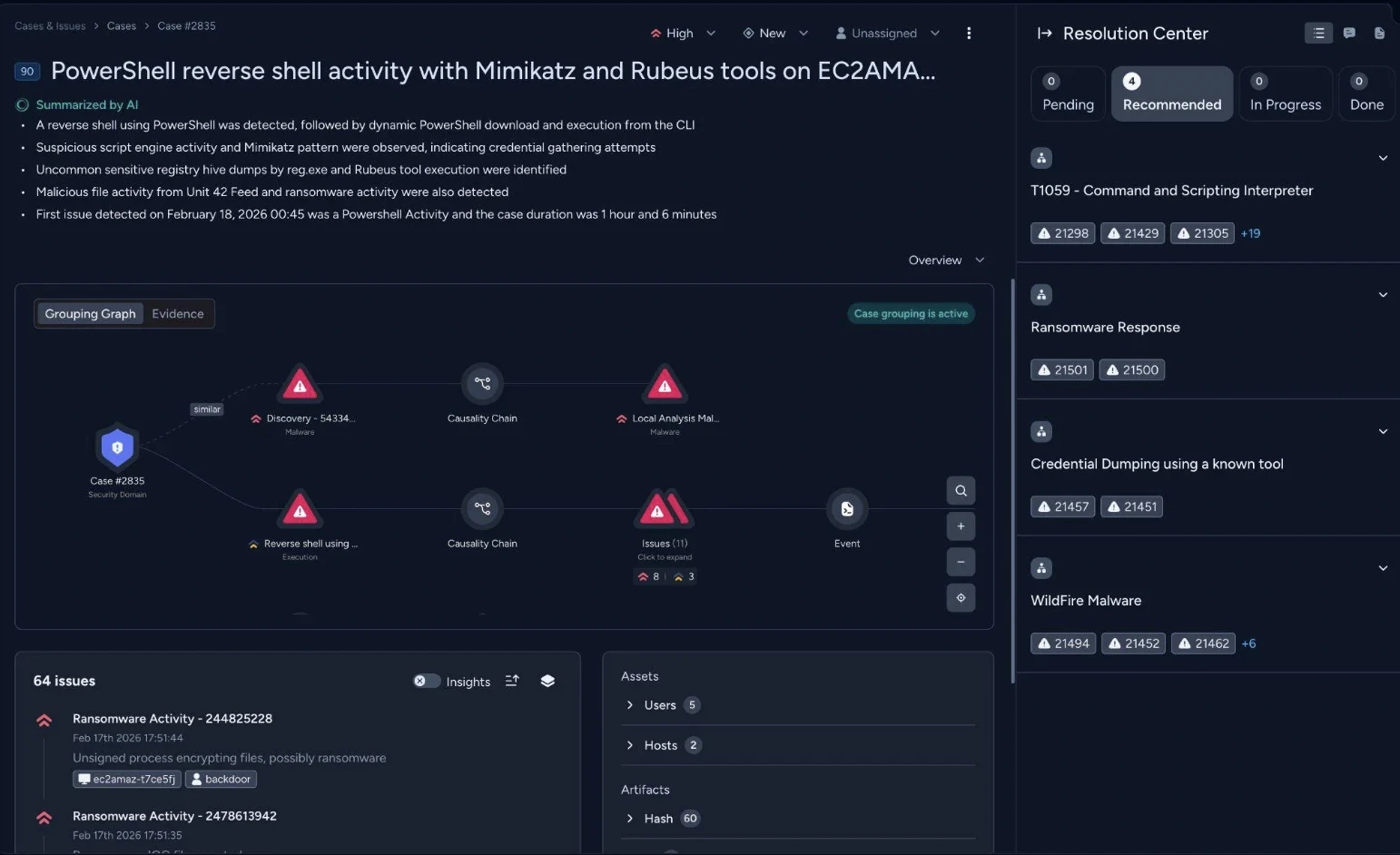
Palo Alto embeds AI across Cortex and its broader security platform, using machine learning for threat detection, anomaly identification, and automated response across endpoints, networks, cloud, and applications. The platform uses AI for threat detection, anomaly identification, and automated response recommendations.
Palo Alto's advantage is platform coverage. The AI components span endpoints, networks, cloud, and applications.
Pros:
Established enterprise presence
Integrated across multiple security layers
Strong threat intelligence
Cons:
A generalist approach means less specialized depth
High enterprise pricing
Requires Palo Alto deployment.
IBM
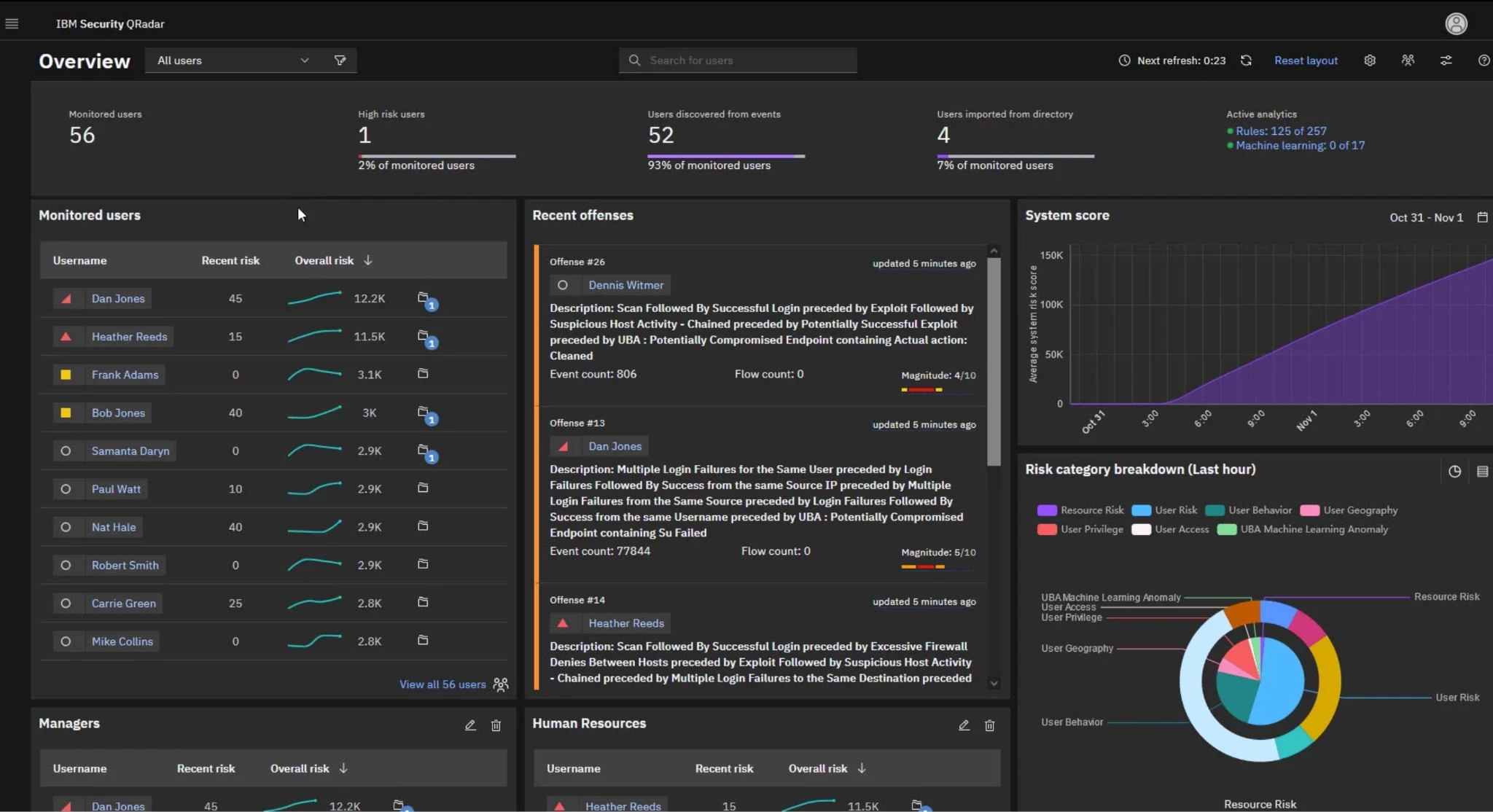
IBM offers AI security capabilities through its QRadar SIEM and broader security portfolio. The AI components provide threat detection, incident correlation, and automated response. It is best for enterprises needing on-premise and cloud visibility.
Pros:
Established enterprise support
Strong compliance support
Hybrid infrastructure capability
Cons:
AI components are added to older architectures,
Higher implementation complexity
High enterprise pricing
Cisco
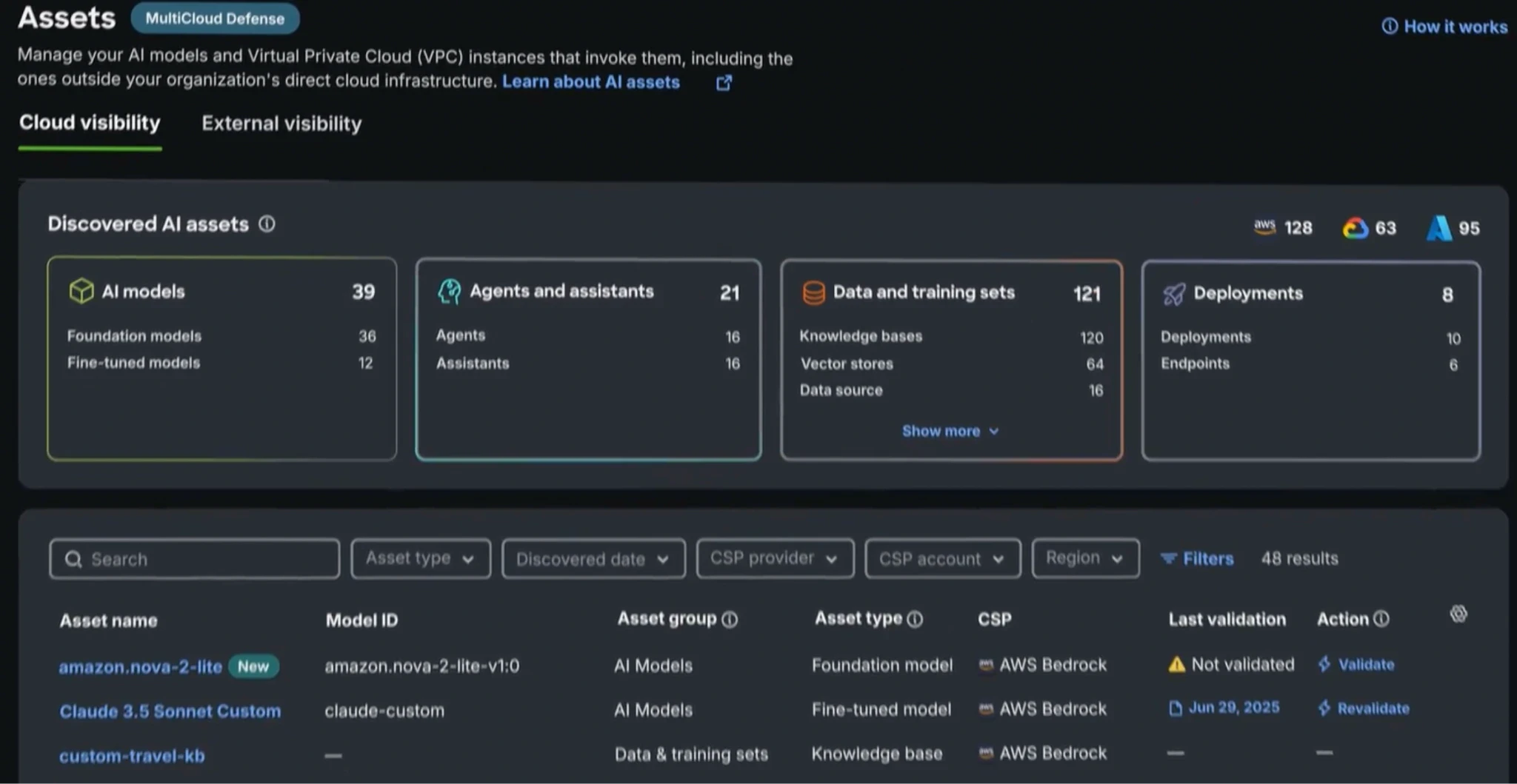
Cisco integrates AI threat detection into its network security and endpoint platforms. The AI components flag unusual traffic patterns, detect network anomalies, and identify potential compromises.
Cisco's strength is network visibility. The AI components leverage Cisco's position to see broad network behavior and correlate threats across segments.
Pros:
Network threat visibility
Established customer base
Strong R&D backing
Cons:
Less comprehensive than specialized vendors
Requires existing Cisco deployments
High enterprise pricing
How to Build Your AI Security Vendor Shortlist
Evaluating top AI security vendors in 2026 requires a structured approach. So, here's an executable four-step framework that enterprise AI security companies expect their customers to follow.
Step 1: Map Your AI Deployment
Start by documenting how your organization currently uses AI. Most security teams skip this, and it's why vendor evaluation stalls.
List every AI tool and system in use: LLM applications your teams built, SaaS tools with embedded AI your departments purchased, autonomous agents in development or production, models you trained internally, third-party APIs your infrastructure depends on. Include both approved and shadow AI deployment.
For each system, document the following:
What it does and who uses it
What data flows through it
Where it runs (cloud provider, on-premises, SaaS)
Whether it's business-critical
Compliance requirements (HIPAA, GDPR, SOX, etc.)
This step takes a few days to a few weeks, depending on organization size, but it eliminates guesswork from your vendor evaluation.
Step 2: Identify Your Primary Risk Category
Not all AI risks are equal in your environment. Review your inventory and identify which category of AI security vendors addresses your highest-priority risk.
For example, if you’re deploying AI agents, your primary category is AI Agent Security & MCP Security, and if you’re running GenAI applications that interact with customers or handle sensitive data, your primary category is LLM Runtime & Prompt Protection.
For most enterprises, one category will be obviously more urgent than the others based on current deployment. So, it’s best to start from there and slowly scale.
Step 3: Evaluate 2-3 Vendors Per Category
Once you've identified your primary category, research the best AI security vendors in that category. Focus on two to three vendors that address your specific risk.
For each vendor, build a brief evaluation matrix covering:
How quickly can you deploy
Integration requirements with your existing infrastructure
Detection accuracy and false positive rates
Pricing model and total cost of ownership
Support and SLA commitments
Vendor stability and roadmap alignment
Request trials or proof-of-concept deployments for your top two candidates.
Step 4: Consolidate Where Possible
After you've selected a vendor for your primary category, evaluate whether that vendor covers secondary categories. Akto, for example, covers both AI Agent & MCP Security and LLM Runtime & Prompt Protection. Microsoft and other enterprise platforms cover multiple categories.
Consolidating reduces complexity and operational overhead. You have fewer integrations to maintain and simpler audit trails.
The practical approach: start with your highest-priority vendor, then evaluate whether adding their secondary categories makes sense.
What CISOs Look For When Evaluating AI Security Vendors
Research from CSO/Proofpoint's surveys shows that CISOs evaluating enterprise AI security companies prioritize four criteria above all others. Understanding what matters to peer security leaders helps you build a shortlist of the best AI security vendors that will actually work in your environment.
Innovation and Category Leadership
CISOs weigh innovation heavily when evaluating top AI security vendors in 2026.
It means vendors that understand emerging threats like prompt injection, agent manipulation, and MCP supply chain attacks. For AI security specifically, you're looking for vendors who are building defenses against attacks that didn't exist two years ago.
Akto and Lakera rank high here because they're purpose-built for current AI threat categories. Established vendors like CrowdStrike and Microsoft are adding AI capabilities, but their core architecture predates the modern AI attack surface.
Reputation and Peer Validation
Your peers' experience matters more than marketing claims. CISOs check whether other enterprises similar to theirs are successfully deploying a vendor. This peer validation is why established vendors have advantages in mature categories.
For AI security vendors, peer validation often means finding security teams at companies similar to yours that have deployed the platform, as real deployment experience carries more weight than proof-of-concept results.
Integration Overhead
CISOs know that lengthy implementations drain resources and delay protection. Vendors requiring minimal code changes, working with your existing model providers, and providing clear documentation score higher than those requiring architectural changes.
Support and Roadmap Alignment
CISOs want vendors committed to their industry's specific needs. For instance, healthcare needs vendors who understand HIPAA requirements more than other policies. So, evaluate whether the vendor's roadmap aligns with your industry's regulatory trajectory over the next year.
Final thoughts on AI Security Vendors
AI threats are fragmented and still emerging in new understated ways. And that’s one reason finding a single best AI security company could be close to impossible.
As a CISO, your task is to: map your deployment, identify your primary risk category, evaluate specialists in that category, and then consolidate where it makes sense.
If you're deploying autonomous agents or building production GenAI applications, you're operating in the two most forward-looking categories of the agentic AI security market. These are the categories where vendors like Akto help defend against attacks that traditional security tools can't see.
Akto covers both AI Agent & MCP Security and LLM Runtime & Prompt Protection. This dual capability matters because most enterprises deploying agents also run LLM applications.
Book a AI Security demo today to see it in action!
FAQ: Choosing the Right AI Security Vendors
1. Who are the best AI security vendors for enterprises in 2026?
The best AI security vendors for enterprises in 2026 depend on your threat surface. For agentic AI and MCP security, Akto and Zenity lead the category. For governance and compliance, Securiti and Cranium cover regulated enterprise needs. No single vendor covers everything, which is why category-first evaluation matters.
2. How do the best AI security vendors for enterprises handle prompt injection?
The best AI security vendors for enterprises address prompt injection at multiple layers: input filtering before the model processes a request, runtime monitoring during agent execution, and output inspection before responses reach users or downstream systems.
3. How do I choose between specialist vendors and enterprise platform vendors?
Specialist vendors like Akto, Lakera, and Darktrace excel in specific categories because they've built their entire platform around that problem. Enterprise platform vendors like Microsoft and Cisco embed AI security into broader platforms. The practical approach: use specialists for your highest-priority risk category where innovation matters most, then use platform vendors for secondary categories if they're already in your environment.
4. Can a single vendor cover all my AI security needs?
No. The best enterprise AI security companies handle one to two categories well. If you're deploying agents, LLM applications and need governance, you'll need at least two vendors.
5. How long does it take to evaluate and deploy an AI security vendor?
Evaluation should take two to four weeks using the four-step framework outlined above. Deployment varies by category. LLM runtime protection vendors like Lakera and Akto typically deploy in weeks because they integrate as middleware. Agent security deployments take similar timelines. Governance vendors take longer because they require environment-wide instrumentation.
6. What’s the fastest way to evaluate AI security vendors?
Use the four-step framework: map your AI deployment, identify your primary risk category, evaluate two to three best AI security vendors in that category, then consolidate where possible. This takes four weeks instead of six months.
Important Links
Experience enterprise-grade Agentic Security solution